

 Contattaci

 Casa /
 Guida alla selezione delle valvole per il trattamento delle acque: affidabilità e conformità ingegneristica
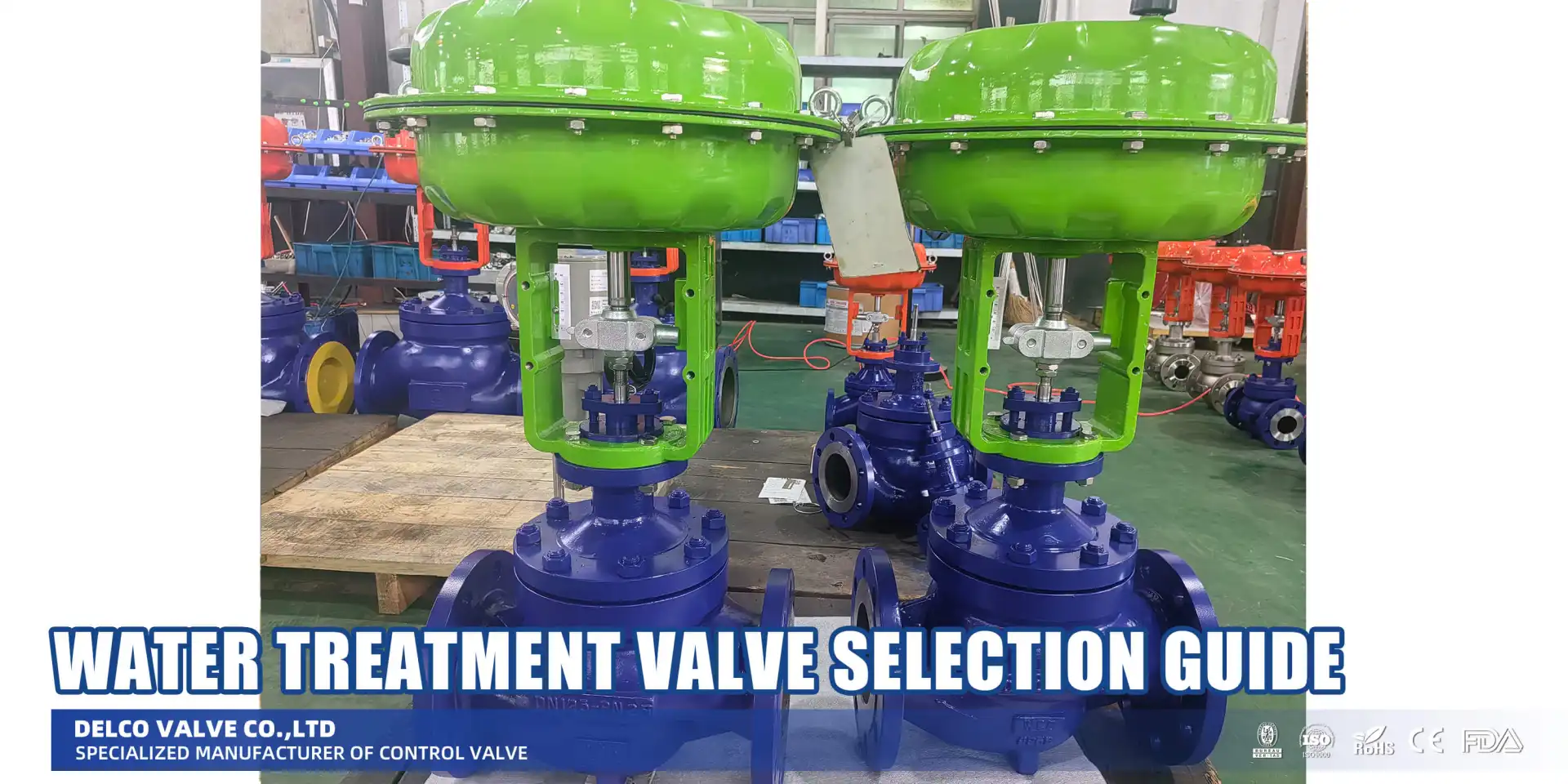
Guida alla selezione delle valvole per il trattamento delle acque: affidabilità e conformità ingegneristica
Settembre 28, 2026
Valvola di controllo a globo: principio di funzionamento, tipologie e guida alla selezione
Settembre 24, 2026
Materiali delle valvole per fanghi abrasivi: ceramica, carburo di tungsteno e rivestite
Settembre 22, 2026
Valvole elettriche a sicurezza intrinseca: cosa succede in caso di interruzione di corrente?
Settembre 17, 2026
1. Introduction: The Critical Role of Valves in Water Treatment
Imagine this scenario: It's 2:00 AM at a municipal water treatment facility processing 50 million gallons per day. A sudden pressure surge causes a catastrophic failure in an aging check valve at the primary pumping station. The resulting water hammer damages the pump, causes localized flooding, and forces the plant into an emergency shutdown. Thousands of residents face a boil-water advisory, and the municipality incurs hundreds of thousands of dollars in emergency repair costs.
This isn't just a hypothetical nightmare—it's a very real risk when valvola di trattamento dell'acqua selection is treated as an afterthought.
In both municipal and industrial water treatment plants, valves act as the vascular system of the facility. They dictate flow, isolate critical zones for maintenance, inject precise amounts of harsh chemicals, and protect multi-million-dollar pumping infrastructure from backflow. Choosing the correct valve is an intricate engineering balance that involves optimizing for reliability, chemical resistance, regulatory compliance (like NSF/WRAS), and total lifecycle cost.
In questo completo valve selection water treatment guide, our engineering team at DELCO valvole explores the critical considerations for specifying, selecting, and maintaining industrial valves in the demanding environment of modern water and wastewater facilities. Whether you are an EPC contractor designing a new desalination plant or a plant manager upgrading municipal infrastructure, this guide will provide the E-E-A-T (Experience, Expertise, Authoritativeness, Trustworthiness) backed insights you need to make informed decisions.
2. Water Treatment Process Overview & Valve Applications
To understand how to specify a valve, we must first understand where it lives within the treatment process. Modern water purification follows a systematic flow, with each stage subjecting valves to unique pressures, abrasive solids, or corrosive chemicals.
Stage 1: Raw Water Intake
Surface water (rivers, lakes) or groundwater is drawn into the facility. This water often contains raw debris, sand, silt, and organic matter.
- Valve Requirements: Must handle large volumes, tolerate abrasive suspended solids, and offer robust isolation for intake screen maintenance.
- Scelte comuni: Large diameter resilient-seated gate valves, AWWA butterfly valves, and heavy-duty swing check valves.
Fase 2: Coagulazione e flocculazione
Chemicals (like aluminum sulfate or ferric chloride) are injected to neutralize electrical charges, causing fine particles to clump together into "floc."
- Valve Requirements: Extreme resistance to corrosive chemicals, precise flow control for accurate dosing.
- Scelte comuni: Globe control valves (for chemical dosing), PVC/CPVC ball valves, and diaphragm valves.
Fase 3: Sedimentazione
The water flows slowly into clarifiers, allowing the heavy floc to settle to the bottom as sludge.
- Valve Requirements: Sludge lines require valves that won't clog when handling high-viscosity, particulate-heavy fluids.
- Scelte comuni: Knife gate valves, eccentric plug valves, and rubber-lined butterfly valves.
Fase 4: Filtrazione
Water passes through layers of sand, gravel, or advanced membrane filters (RO/UF) to remove the remaining dissolved particles.
- Valve Requirements: Frequent cycling for filter backwash operations, tight shut-off, and rapid actuation.
- Scelte comuni: Alte prestazioni pneumatic butterfly valves and automated gate valves.
Fase 5: disinfezione
Chlorine, chloramines, ozone, or UV light is applied to kill pathogenic bacteria and viruses.
- Valve Requirements: Zero-leakage capability, high compatibility with highly oxidative chemicals like sodium hypochlorite.
- Scelte comuni: PTFE-lined ball valves, specialized globe valves, and corrosion-resistant check valves.
Fase 6: distribuzione
The treated, potable water is pumped into the municipal grid.
- Valve Requirements: Strict adherence to drinking water standards (NSF 61 / WRAS), low pressure drop, and exceptional longevity.
- Scelte comuni: Large diameter AWWA butterfly valves, non-slam check valves, and air release valves.
3. Core Valve Types Used in Water Treatment
Navigating the diverse range of valve designs requires an understanding of their mechanical advantages and limitations. Below are the primary valves utilized in the water sector.
Butterfly Valves: The Workhorse of Water Treatment
When you mention a butterfly valve water treatment application, most plant operators nod in agreement. They are the most ubiquitous valves in the industry for medium to large diameter pipelines (DN50 to DN1200+).
- Funzionalità: Flow isolation (on/off) and moderate throttling.
- Perché vengono utilizzati: They offer a compact face-to-face dimension, making them lighter and cheaper than gate valves. The quarter-turn operation allows for quick actuation.
- varietà: Concentric (rubber-lined) for clean water; Double or Triple Offset for higher pressures and tighter shut-off.
- Raccomandazioni sui materiali: Ductile iron body with epoxy coating, EPDM or NBR seats, and stainless steel (CF8M) or Al-Bronze discs.
- Esplora: DELCO Valvole a farfalla
Gate Valves: Reliable Full-Bore Isolation
Gate valves are the traditional standard for isolation, particularly in underground distribution networks and pump stations.
- Funzionalità: Strictly for on/off flow isolation. Do not use for throttling, as the gate will vibrate and wear prematurely.
- Perché vengono utilizzati: They provide a straight-through, full-bore flow path, meaning there is virtually zero pressure drop when fully open. They are also easily "pigged" (cleaned).
- varietà: Resilient-seated gate valves (where the wedge is fully encapsulated in rubber for a bubble-tight seal) are now the standard for water applications, replacing older metal-seated designs.
- Esplora: DELCO Saracinesche
Check Valves: The Pump Protectors
A check valve water treatment system relies on these self-actuating devices to ensure one-way flow, preventing reverse flow that could spin pumps backward or contaminate treated water.
- Funzionalità: Backflow prevention and water hammer mitigation.
- Perché vengono utilizzati: To protect expensive pumping infrastructure.
- varietà:
- Controllo dello swing: Simple, used for low-velocity applications.
- Dual Plate Check: Compact, lower pressure drop.
- Non-Slam / Tilting Disc: Crucial for high-head pump stations to close rapidly before the water column reverses, preventing devastating water hammer.
- Esplora: DELCO Valvole di Ritegno
Globe and Control Valves: The Precision Instruments
When exact flow rates or pressure reductions are required—such as in chemical dosing or maintaining specific reservoir levels—globe valves are utilized.
- Funzionalità: Precise flow regulation and throttling.
- Perché vengono utilizzati: Their internal "S" shaped flow path allows for granular control over the fluid flow, and they can be fitted with intelligent attuatori elettrici (4-20mA, HART protocol) for automated SCADA integration.
- Raccomandazioni sui materiali: Due to their use in chemical dosing, these are often specified in high-grade stainless steels (316L), Alloy 20, or PTFE-lined bodies.
Ball Valves: Small Bore and Chemical Specialists
For pipelines under DN50 (2 inches) and chemical feed lines, ball valves are the preferred choice.
- Funzionalità: Quick quarter-turn isolation.
- Perché vengono utilizzati: They offer bubble-tight shut-off, low torque operation, and are highly resistant to fouling.
- Raccomandazioni sui materiali: PVC/CPVC for hypochlorite lines, Stainless Steel for ozone, and Brass/Bronze for general small-bore utility water.
4. Mastering Material Selection for Water Chemistry
The success of a water treatment valve hinges largely on the materials comprising its body, disc/trim, and soft seals. Water is not just H2O; it contains dissolved minerals, injected halogens (chlorine), and fluctuating pH levels.
Materiali per il corpo
- Ghisa duttile (DI): The industry standard for large water mains. Stronger and less brittle than cast iron. Usually coated in Fusion Bonded Epoxy (FBE) to prevent rusting.
- Stainless Steel (CF8/CF8M): Used in high-corrosion areas, RO (Reverse Osmosis) skids, and desalination plants where chlorides would attack ductile iron.
- Acciaio inossidabile duplex/super duplex: Essential for seawater intakes in desalination due to their high Pitting Resistance Equivalent Number (PREN).
- PVC/CPVC/PP: Lightweight, highly corrosion-resistant plastics used almost exclusively in the chemical feed and dosing rooms.
Seat and Seal Materials (Elastomers)
- EPDM (monomero di etilene propilene diene): The go-to rubber for drinking water and wastewater. Excellent resistance to ozone, weather, and mild chemicals. Cruciale: L'EPDM lo è non è un resistant to hydrocarbons/oils.
- NBR (nitrile): Used if the wastewater has oil or grease contamination.
- PTFE (Teflon): Used in chemical dosing valves where absolute chemical inertness is required (e.g., highly concentrated sodium hypochlorite).
- Vitone (FKM): High-temperature and strong acid applications.
5. Valve Selection by Application (Quick Reference)
To simplify the decision-making process for EPCs and plant engineers, refer to this selection matrix for typical water treatment stages.
| Fase di trattamento | Fluido applicativo | Tipo di valvola consigliato | Recommended Body / Trim Material | Posto consigliato |
|---|---|---|---|---|
| Presa | Raw River/Lake Water | Resilient Gate Valve / AWWA Butterfly | Ductile Iron (FBE Coated) / SS 304 | EPDM |
| Intake (Sea) | Acqua di mare non trattata | Valvola a farfalla ad alte prestazioni | Duplex Stainless / Al-Bronze | EPDM / PTFE |
| Chemical dosaggio | Coagulants / Alum | Globe Control Valve / Ball Valve | PVC / CPVC / SS 316 | PTFE |
| La sedimentazione | Sludge Lines | Knife Gate Valve / Plug Valve | Ductile Iron / Hardened Steel Trim | NBR / EPDM |
| Filtrazione | Filter Backwash | Valvola a farfalla pneumatica | Ductile Iron / CF8M Disc | EPDM |
| Disinfezione | Chlorine Injection | PTFE-Lined Ball Valve / Diaphragm | Carbon Steel (PTFE Lined) | PTFE |
| Distribuzione | Potable Water Mains | Butterfly Valve / Non-Slam Check | Ductile Iron (NSF-61 Approved) | EPDM (NSF) |
6. Key Selection Criteria for Engineers and Buyers
When compiling the BOM (Bill of Materials) for a water treatment project, ensure these five criteria are heavily scrutinized:
- Certificazioni normative: For any valve touching municipal drinking water, it devono obbligatoriamente: carry certifications proving it will not leach toxins into the water supply. In North America, this is NSF/ANSI 61 and NSF/ANSI 372 (lead-free). In the UK, it is WRAS. In Europe, ACS or DVGW.
- Actuation and Automation Requirements: How will the valve be operated?
- Manuale: Handwheels or gearboxes for valves rarely cycled.
- Pneumatico: Ideal for fast-acting applications like filter backwash. Requires plant air. View pneumatic actuated valves.
- Elettrico: Essential for SCADA integration, precise modulation, and remote installations. Ensure the enclosure rating (IP67/IP68) matches the environment.
- Protezione dalla corrosione: Underground or submerged valves must have robust external protection. Look for valves with electrostatic Fusion Bonded Epoxy (FBE) coatings inside and out, minimum 250 microns thick, compliant with AWWA C550.
- Classe di perdita: For chemical isolation and distribution, specify zero-leakage valves (API 598 or FCI 70-2 Class VI).
- Costo totale di proprietà (TCO): A cheaper, poorly coated valve will corrode and fail within 5 years, requiring excavation, plant downtime, and labor. Investing 20% more upfront in a high-quality DELCO valve with superior seals and coatings can extend the lifecycle to 25+ years, drastically lowering TCO.
7. Common Valve Problems in Water Treatment & Solutions
Even the best-designed plants encounter issues. Here is our E-E-A-T troubleshooting guide for water utility professionals:
Problem 1: Water Hammer (Hydraulic Shock)
- sintomo: Loud banging noises in the pipes after a pump stops, often leading to ruptured pipes or blown seals.
- causa: A standard swing check valve is closing too slowly. The water column reverses, gains momentum, and slams the valve disc shut.
- Soluzione: Aggiorna a Valvola di ritegno anti-slam or Tilting Disc Check Valve equipped with a hydraulic dashpot. These close rapidly before the flow can reverse.
Problem 2: Rapid Elastomer Degradation
- sintomo: Butterfly valve EPDM seats are cracking, swelling, or failing to seal after just a year.
- causa: The valve was accidentally subjected to ozone disinfection lines or trace hydrocarbon oils from plant machinery, which destroy EPDM.
- Soluzione: Verify fluid chemistry. Switch to Viton or PTFE seats for high-chemical zones.
Problem 3: Cavitation in Control Valves
- sintomo: Valves sound like gravel is rushing through them, followed by severe pitting and erosion on the metal trim.
- causa: High pressure drops across the valve cause the fluid to drop below its vapor pressure, forming bubbles that violently implode against the metal.
- Soluzione: Utilize anti-cavitation trim (multi-stage pressure drop designs) in your globe valves, or reconsider the pipe sizing and system pressure scheme.
Problem 4: Actuator Failure in Humid Environments
- sintomo: Electric actuator circuitry shorts out.
- causa: High humidity and condensation inside the treatment plant, or brief submergence during heavy rains.
- Soluzione: Specify IP68 submersible electric actuators equipped with internal anti-condensation space heaters.
8. Domande frequenti (FAQ)
Q1: What is the best valve type for water treatment filter backwash systems? Risposta: High-performance or rubber-lined concentric valvole a farfalla paired with double-acting pneumatic actuators are the standard. They open and close rapidly, endure high cycle rates, and offer a low pressure drop.
Q2: Can I use a standard cast iron valve for drinking water? Risposta: No. Modern standards require Ductile Iron (which is stronger) coated heavily with NSF-approved Fusion Bonded Epoxy to prevent rust. Furthermore, the valve must be certified lead-free.
Q3: What is the difference between an AWWA valve and a standard industrial valve? Risposta: AWWA (American Water Works Association) valves are explicitly designed for municipal water systems. They generally feature heavier wall thicknesses, specific FBE coating requirements, and conservative pressure ratings meant to ensure a 50-year underground lifespan.
Q4: How do I prevent check valve slam in a high-head pump station? Risposta: Replace conventional swing check valves with non-slam axial flow check valves or tilting disc check valves. These are engineered with a very short stroke distance and spring-assisted closures to shut split-seconds before flow reversal occurs.
Q5: When should I use stainless steel instead of epoxy-coated ductile iron? Risposta: Stainless steel (CF8M or Duplex) should be utilized in Reverse Osmosis (RO) systems, desalination seawater intakes, or high-concentration chemical dosing lines where aggressive chlorides or acids would quickly strip the epoxy coating and corrode ductile iron.
9. Conclusione e passi successivi
Corretto valve selection in water treatment is not simply a matter of matching pipe sizes. It requires a holistic understanding of fluid dynamics, water chemistry, regulatory frameworks, and actuation technology. By choosing the right butterfly, gate, globe, and check valves, plant engineers can dramatically reduce downtime, lower maintenance budgets, and ensure the safe, continuous delivery of clean water to communities and industrial processes alike.
At DELCO valvole, we have decades of experience engineering robust, certified fluid control solutions for the world's most demanding water and wastewater projects. From intelligent electric actuated globe valves to massive DN1200 distribution butterfly valves, our products are built for the long haul.
Ready to upgrade your plant's reliability?
- 📥 Download our Full Product Catalog to see our complete range of DNV/CCS/NSF certified valves.
- ???? Contatta il nostro team di ingegneria at inquiry@delcofluid.com for technical sizing, P&ID review, and custom project quotes.
Condividi sui social:


- PRECEDENTE: Valvola di controllo a globo: principio di funzionamento, tipologie e guida alla selezione
- IL PROSSIMO: Non il prossimo
Contattaci
In questo articolo
Guida alla selezione delle valvole per il trattamento delle acque: affidabilità e conformità ingegneristica
Settembre 28, 2026
Valvola di controllo a globo: principio di funzionamento, tipologie e guida alla selezione
Settembre 24, 2026
Materiali delle valvole per fanghi abrasivi: ceramica, carburo di tungsteno e rivestite
Settembre 22, 2026
Valvole elettriche a sicurezza intrinseca: cosa succede in caso di interruzione di corrente?
Settembre 17, 2026