




Electric Fluorine-lined Butterfly Valves
DELCO Electric Fluorine-lined Butterfly Valves are built for extreme corrosion resistance. Lined with PTFE/PFA, these motorized valves safely handle aggressive acids, alkalis, and solvents where standard metal valves fail.


-
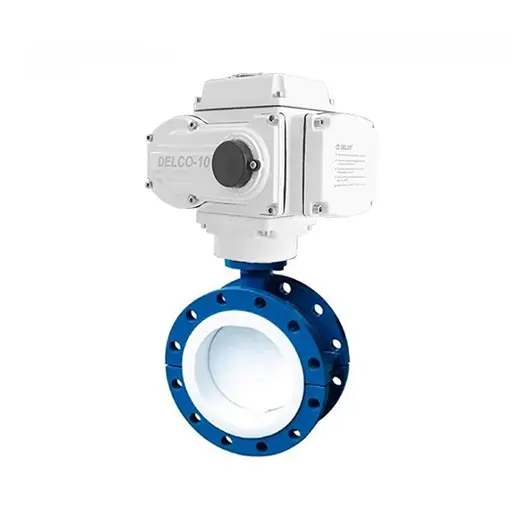
Electric Fluorine Lined Flanged Butterfly Valve for Aggressive Chemical Services
 Size Range: DN40-DN1200
Material:Cast Iron, WCB, SS304/316 etc.
Connection Standard: GB / ANSI / JIS /DIN
-

DELCO DK56-DC Electric Fluorine Lined Wafer Butterfly Valve for Universal Chemical Resistance
Size Range: DN40-DN1200
Material:Cast Iron, WCB, SS304/316 etc.
Connection Standard: GB / ANSI / JIS /DIN
Electric Fluorine-Lined Butterfly Valves (100% PTFE & PFA Encapsulated)
DELCO electric fluorine-lined butterfly valves are engineered for severe chemical containment where corrosive acids, aggressive alkalis, and strong oxidizers destroy standard metallic valves. Featuring a two-piece split body design, the ductile iron or carbon steel shell is completely isolated from the process stream by a thick, seamless virgin PTFE or molded PFA liner. The disc and one-piece drive stem are equally encapsulated in high-density fluoropolymer (minimum 3.0mm thickness). As a premier severe-service chemical line within the DELCO electric butterfly valve collection, these valves provide total chemical immunity equal to Hastelloy or Titanium at a fraction of the cost, driven by acid-resistant motorized electric actuators.
Virgin PTFE Lined Series (Up to 150°C)
Engineered for concentrated inorganic acids, pickling lines, and chlor-alkali production (DN50 to DN600 / 2" to 24"). Solid virgin PTFE seat backed by resilient silicone elastomer cushions provides permanent radial sealing against the polished disc edge with zero leakage.
- 100% pure virgin PTFE resin with ultra-dense molecular structure
- Resilient silicone or EPDM backup pad maintains live-loaded memory
- Resists hydrochloric acid, hydrofluoric acid, caustic soda, and wet chlorine
Molded PFA High-Purity Series (Up to 180°C)
Built for high-temperature chemical reactions, boiling acids, and ultra-pure electronic chemical loops. High-pressure transfer-molded PFA delivers superior crack resistance, ultra-low trace-metal extraction, and mechanical stability under high operating temperatures.
- Operating temperature range: -20°C up to +180°C (356°F)
- Dovetail groove anchoring locks lining securely under full vacuum
- Cleanroom packaged for semiconductor wet benches and fine pharma
Why Chemical Engineers Rely on DELCO Lined Butterfly Valves
Engineered with 15kV dielectric spark verification, live-loaded silicone backings, and acid-resistant actuator protection.
100% 15kV High-Voltage Spark Tested
Every square millimeter of fluoropolymer lining on the body and disc is 100% spark-tested at 15,000 Volts prior to assembly. Guarantees zero microscopic pinholes, porosity voids, or cracks, ensuring total metal isolation.
Resilient Silicone Elastic Backup
PTFE alone exhibits plastic creep over time. DELCO lines the body cavity with a high-grade resilient silicone or EPDM elastomer cushion behind the PTFE seat. This provides continuous spring-loaded memory for bubble-tight Class VI shut-off.
Triple Dynamic Stem Sealing
Stem leakage can destroy actuators and pose toxic hazards. Our three-stage barrier combines wide spherical disc-hub seals, secondary PTFE V-rings, and spring-energized O-rings, preventing fugitive emissions per ISO 15848-1.
Minimum 3.0mm Lining Thickness
We strictly reject thin sprayed coatings. All bodies and discs are high-pressure molded with virgin fluoropolymer maintaining a minimum certified wall thickness of 3.0mm to 5.0mm, preventing acid permeation over decades of service.
Acid-Mist Proof Actuator Protection
Chemical plant atmospheres carry heavy airborne acidic vapors. DELCO electric actuators feature multi-layer polyurethane coatings, 316SS external fasteners, and sealed IP67/IP68 enclosures to prevent corrosion of motor drives.
Split-Body Rigidity & Direct Mount
The precision two-piece ductile iron body clamps firmly around the liner, while the integrated ISO 5211 top flange allows direct actuator mounting, eliminating loose brackets and ensuring perfect quarter-turn seating alignment.
Fluorine-Lined Valve Engineering Matrix & Chemical Guide
Review standardized lining configurations, body styles, temperature thresholds, and chemical compatibility pairings.
| Lining & Body Class | Size Range | Liner Material & Thickness | Working Temperature | Pressure Rating | Typical Aggressive Media |
|---|---|---|---|---|---|
| Wafer PTFE Lined Class | DN50 – DN600 (2" – 24") | Virgin PTFE (≥ 3.0 mm) | -20°C to +150°C (302°F) | 1.0 – 1.6 MPa (150# / PN16) | Hydrochloric Acid, Sulfuric Acid, Brine |
| Lugged PTFE Lined Class | DN50 – DN400 (2" – 16") | Virgin PTFE + Silicone Pad | -20°C to +150°C | 1.0 – 1.6 MPa (Class 150) | Chemical Storage Tanks, Acid Offloading |
| Molded PFA High-Temp Class | DN50 – DN350 (2" – 14") | Molded PFA (≥ 3.5 mm) | -20°C to +180°C (356°F) | 1.0 – 1.6 MPa (Class 150) | Hot Nitric Acid, Wet Chlorine Gas, Solvents |
| FEP (F46) Lined Economy Class | DN50 – DN500 (2" – 20") | FEP / F46 (≥ 3.0 mm) | -20°C to +120°C (248°F) | 1.0 MPa (PN10) | Wastewater Neutralization, Dilute Alkalis |
| Double-Flanged Lined Class | DN100 – DN800 (4" – 32") | Virgin PTFE (≥ 4.0 mm) | -20°C to +150°C | 1.0 – 1.6 MPa (PN16) | Large Chemical Processing Headers |
Technical FAQs: Fluorine-Lined Butterfly Valve Automation
Critical chemical engineering answers regarding spark testing, vacuum resistance, and lining differences.
1. How does DELCO guarantee that fluoropolymer linings have zero microscopic pinholes?
Microscopic voids or pinholes in a chemical valve liner allow concentrated acids to seep through, silently corroding the metallic body until catastrophic structural failure occurs. DELCO subjects 100% of body liners and encapsulated discs to a non-destructive 15,000 Volt (15kV) high-frequency dielectric spark test. Any microscopic defect immediately triggers an electric arc, ensuring only flawless linings pass quality control.
2. Why is an elastic silicone backup pad necessary behind the PTFE body liner?
PTFE is a non-elastic fluoropolymer with a tendency to suffer cold flow (plastic deformation) under constant compression. If a PTFE liner were seated directly against rigid cast iron, it would gradually deform and lose its sealing interference. DELCO inserts a resilient silicone or EPDM elastomer backing behind the PTFE liner, acting as an internal spring that maintains continuous radial sealing force against the disc edge.
3. What is the difference between PTFE, PFA, and FEP linings in butterfly valves?
• PTFE: Industry workhorse for acids and alkalis up to 150°C; outstanding non-stick properties and broad chemical compatibility.
• PFA: Melt-processable with higher mechanical strength up to 180°C; superior crack resistance and full-vacuum anchoring capability for severe chemical loops.
• FEP (F46): Economical fluoropolymer for moderate temperatures up to 120°C; excellent chemical resistance for wastewater neutralization.
4. Can fluorine-lined butterfly valves handle throttling control service?
Yes. When coupled with DELCO 4–20mA modulating electric actuators, lined butterfly valves provide reliable chemical throttling. Because PTFE exhibits an exceptionally low coefficient of friction, disc rotation is smooth without stick-slip, providing repeatable chemical flow control between 20° and 70° disc opening angles.
Factory Direct Supply for Fluorine-Lined Butterfly Valves
Eliminate acid corrosion risks with verified fluoropolymer-lined butterfly valve automation. DELCO provides 100% 15kV dielectric spark test reports, chemical resistance engineering consultation, acid-resistant actuator packages, and rapid worldwide dispatch.