



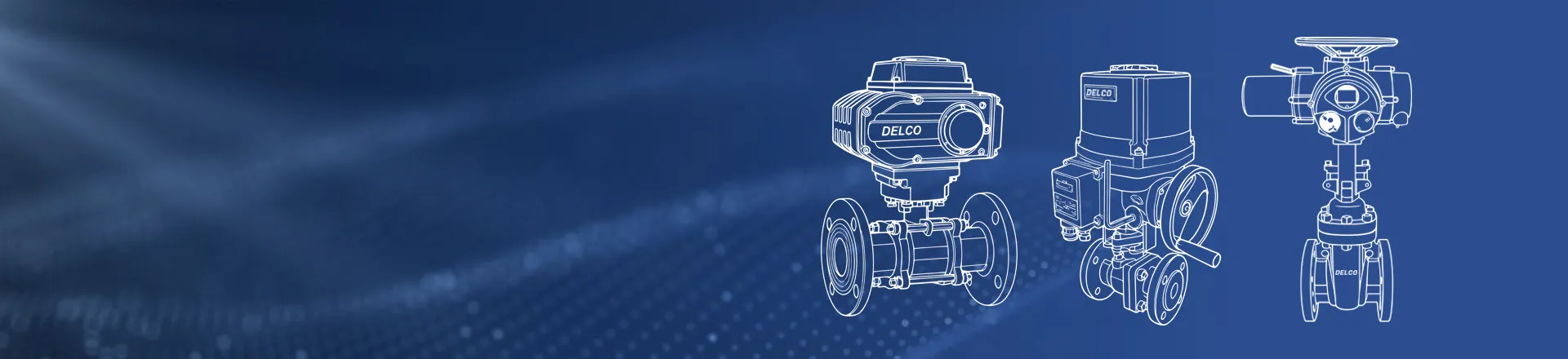
Electric High Pressure Ball Valves
DELCO Electric High Pressure Ball Valves are constructed with forged bodies to withstand extreme pressures. Ideal for hydraulic systems and CNG applications, these motorized valves provide reliable isolation where standard valves cannot perform.


-
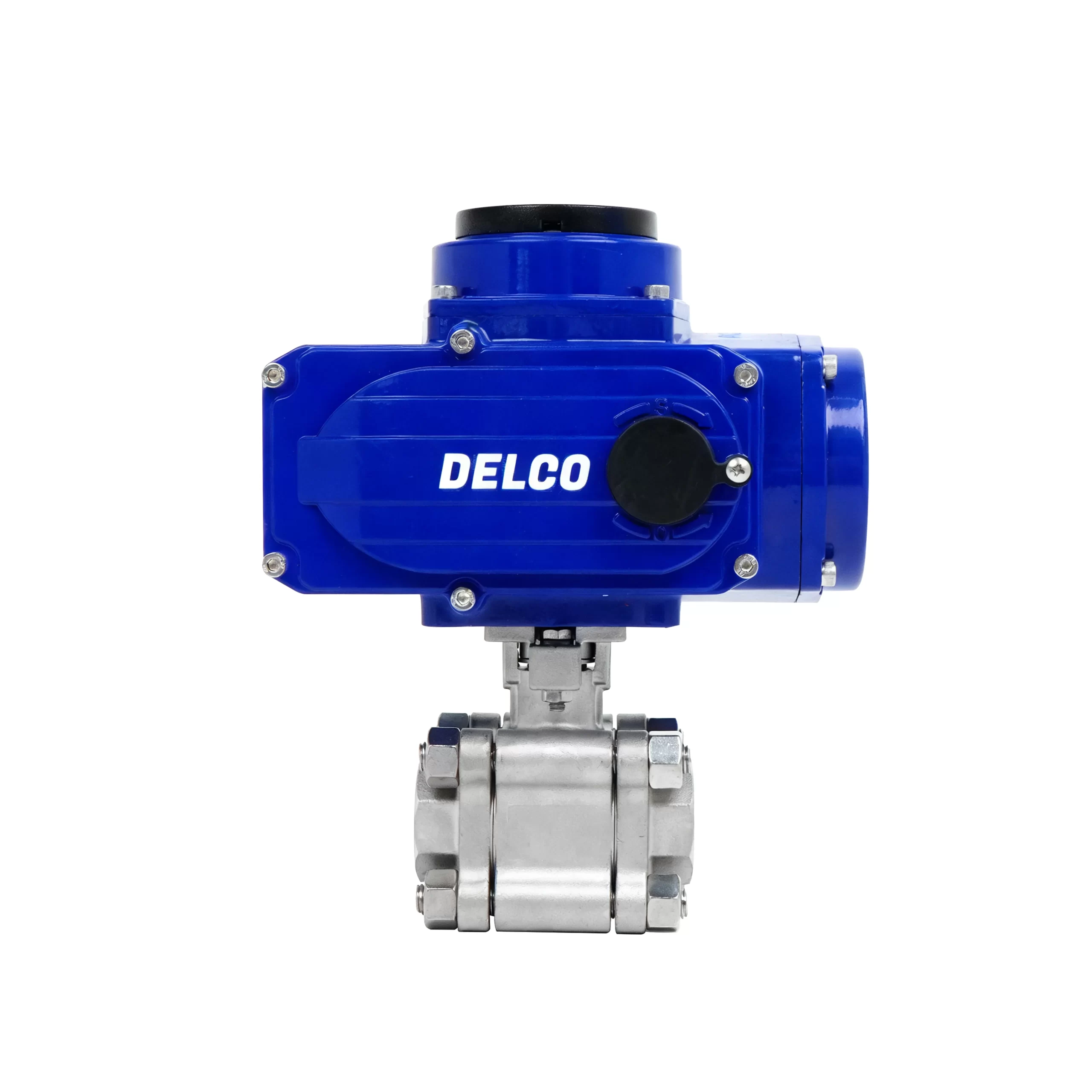
DELCO IP67-DKS55-3PH Electric High Pressure 3-Piece Ball Valve - 2000 PSI
 Size Range: DN06-DN100
Material: WCB, Stainless Steel etc.
Connection Standard: G / BSPT / NPT
-

DELCO IP67-DK55-HGT Electric High Pressure 3-Way Ball Valve - Forged Steel
Size Range: DN08-DN50
Material: WCB, Stainless Steel etc.
Pressure Range: 100~400Bar
-

DELCO IP67-DK55-HG Electric High Pressure Ball Valve - Forged Steel, 500 Bar
Size Range: DN08-DN50
Material: WCB, Stainless Steel etc.
Pressure Range: 100~400Bar
-

DELCO DK55-HG Electric High-Pressure Ball Valve - Forged Steel, 4-20mA Modulating, 220V On-Off
Size Range: DN08-DN50
Material: WCB, Stainless Steel etc.
Pressure Range: 100~400Bar
-

DK55-3PH Electric 3-Piece High-Pressure Ball Valve - 2000 WOG Threaded for Severe Service
Size Range: DN06-DN100
Material: WCB, Stainless Steel etc.
Connection Standard: G / BSPT / NPT
-

DK55-HG-T High-Pressure Electric 3-Way Ball Valve (L/T Type) for Diverting & Shut-off
Size Range: DN08-DN50
Material: WCB, Stainless Steel etc.
Pressure Range: 100~400Bar
-

Forged Steel Electric 2-Way High-Pressure Ball Valve for Reliable Control
Size Range: DN08-DN50
Material: WCB, Stainless Steel etc.
Pressure Range: 100~400Bar
Electric High-Pressure Ball Valves (Class 600 to Class 2500 / Up to 500 Bar)
DELCO electric high-pressure ball valves are heavy-duty flow control units engineered to deliver bubble-tight isolation and severe throttling in extreme differential-pressure pipelines. Manufactured from high-integrity forged carbon steel, stainless steel, and duplex alloys (ASTM A105, F316, F51), these valves eliminate microscopic casting porosity to withstand operating pressures ranging from 100 bar (1,480 psi / Class 600) up to 500 bar (7,250 psi / Class 2500). As a flagship severe-service tier within the DELCO electric ball valves series, every high-pressure assembly integrates heavy-torque industrial electric actuators, trunnion-mounted ball bearings, and blow-out proof stems, ensuring zero leakage across oil & gas gathering, chemical hydrogenation, CNG refueling, and supercritical steam utilities.
Forged Trunnion-Mounted Series (Class 600–2500)
Engineered for heavy-bore mainline pipelines (DN50 to DN300 / 2" to 12"). Incorporates fixed upper and lower trunnion plates that absorb massive hydrostatic line thrust, dramatically reducing operating break-away torque and preventing seat crushing under extreme pressure differentials.
- Double Block and Bleed (DBB) capability per API 6D
- Spring-energized self-relieving seats (Single Piston Effect - SPE)
- End connections: ASME B16.5 RTJ (Ring Type Joint) & RF flanges
Hydraulic High-Pressure Block Series (Up to 50 MPa)
Built from solid-forged steel rectangular blocks for high-pressure hydraulic skids, CNG dispensing stations, and water jet cutting systems (DN10 to DN50 / 1/4" to 2"). Precision Delrin (POM) or PEEK seats guarantee bubble-tight zero leakage at up to 500 bar working pressure.
- Ultra-compact forged carbon steel or 316 stainless body
- Threaded NPT, BSPP, or high-pressure SAE 4-bolt flange ports
- Direct ISO 5211 actuator mounting pad with zero-backlash drive
Why Engineers Rely on DELCO High-Pressure Ball Valves
Engineered with heavy-wall forged metallurgy, trunnion bearing geometry, and advanced seat chemistry for safe high-pressure containment.
100% Forged Steel Body Metallurgy
Manufactured exclusively from forged materials (ASTM A105, F316, F51 Duplex) rather than sand castings. High-density forged grain structure eliminates internal gas voids, shrinkage cracks, and structural micro-porosity under 420+ bar hydraulic stress.
Trunnion-Mounted Low-Torque Stability
Heavy-duty upper and lower trunnion plates anchored in PTFE/bronze composite bearings absorb full hydrostatic line loads. This ensures consistent low torque during cycling, preventing motor stalls and allowing compact, economical actuator sizing.
PEEK, Devlon & Metal Hard-Faced Seats
Configured with high-modulus virgin PEEK or Devlon V-API seats for bubble-tight Class VI shut-off up to Class 1500. For Class 2500 abrasive or steam service, supersonic HVOF Tungsten Carbide (WC-Co) metal-to-metal seating resists erosion.
Anti-Blowout Stem & Dual O-Ring Seals
Internally assembled one-piece forged blow-out proof stem incorporates heavy thrust bearing collars and secondary Viton/AFLAS O-ring packings. Completely eliminates hazardous stem ejection risks under catastrophic line pressure surges.
Double Block & Bleed (DBB) Isolation
Dual spring-loaded floating seat rings create independent upstream and downstream seals simultaneously. A body cavity bleed plug allows plant operators to verify zero leakage across both seats while the pipeline is operating under full live pressure.
Heavy-Torque Actuation with Safety Margin
High differential pressures demand substantial break-away torque. DELCO automated packages feature electric actuators sized with a minimum 35% torque safety margin, planetary gear reduction, dual torque limit switches, and manual declutch handwheels.
High-Pressure Engineering Matrix & Specifications
Review standardized pressure class ratings, valve bore ranges, seat materials, and typical severe-service industrial applications.
| Pressure Rating Class | Design Pressure | Size Range | Body Material (Forged) | Seat & Seal Material | Typical Severe Applications |
|---|---|---|---|---|---|
| Class 600 / PN100 Class | 100 Bar (1,480 psi) | DN50 – DN300 (2" – 12") | ASTM A105 / F316 | Reinforced PTFE / Devlon | Natural Gas Gathering & Compression |
| Class 900 / PN160 Class | 150 Bar (2,220 psi) | DN50 – DN250 (2" – 10") | ASTM A105 / F316 / F51 | Devlon V-API / PEEK | High-Pressure Gas Injection & Offshore |
| Class 1500 / PN250 Class | 250 Bar (3,705 psi) | DN25 – DN200 (1" – 8") | Forged F316 / F51 Duplex | Virgin PEEK / Stellite Metal | Oil & Gas Wellheads, Choke Manifolds |
| Class 2500 / PN420 Class | 420 Bar (6,170 psi) | DN25 – DN150 (1" – 6") | Forged F316 / Inconel 625 | Tungsten Carbide (HVOF Metal) | Supercritical Steam, Hydrocracking |
| Hydraulic 50 MPa Block Class | 315 – 500 Bar (7,250 psi) | DN10 – DN50 (1/4" – 2") | Solid Forged Carbon / 316 | Delrin (POM) / PEEK | CNG Fuel Skids & Hydraulic Test Benches |
Technical FAQs: High-Pressure Ball Valve Automation
Critical engineering insights regarding trunnion mechanics, seat selection, and high-differential pressure actuator sizing.
1. Why is a trunnion-mounted design mandatory for high-pressure ball valves above Class 600?
In a floating ball valve, line pressure pushes the entire ball against the downstream seat. At high pressures (such as Class 600 or 100 bar), this lateral hydraulic force generates extreme friction that crushes soft seats, causes galling, and creates massive break-away torque that can stall or damage actuators. Trunnion-mounted designs anchor the ball securely on upper and lower mechanical bearing shafts, absorbing the hydraulic thrust mechanically so the seats only provide sealing contact, keeping operating torque low and consistent.
2. What is the difference between PEEK and metal-to-metal seating in high-pressure valves?
Virgin PEEK (or Devlon V-API): High-strength thermoplastic seats that deliver ANSI Class VI bubble-tight shut-off for clean gas and hydrocarbon lines up to Class 1500 and temperatures up to 250°C.
Metal-to-Metal Hard-Facing: The ball and seat rings are coated with supersonic HVOF Tungsten Carbide (WC-Co) or Stellite 6. Essential for Class 2500 services, erosive fluids containing sand/particulates, and supercritical steam exceeding 300°C where soft polymers would degrade.
3. When should RTJ (Ring Type Joint) flanges be specified over Raised Face (RF)?
For ASME Class 600 pipelines handling hazardous gas or volatile hydrocarbons, and for virtually all pipelines rated at Class 900, 1500, and 2500, RTJ flanges are strongly recommended. RTJ connections utilize precision-machined metallic octagonal ring gaskets (such as soft iron or 316SS) that deform elastically under bolt load into flange grooves, creating an indestructible metal-to-metal seal immune to blowout under extreme hydraulic surges.
4. How does DELCO ensure electric actuators don't stall under cold high-differential start-up?
Under high differential line pressures, the break-away torque after extended idle periods can be 20% to 30% higher than normal running torque. DELCO calculates high-pressure actuator sizing using verified API 6D torque formulas and incorporates a minimum 35% safety margin. Our actuators feature high-starting-torque motors with planetary gear reduction, Belleville spring torque protection, and electronic torque limit sensors that prevent motor burn-out.
Factory Direct Supply for High-Pressure Actuated Valves
Secure reliable severe-service flow automation with factory-tested forged high-pressure ball valves. DELCO provides 100% hydrostatic shell testing (1.5x rating), high-pressure nitrogen gas testing, RTJ flange machining, EN 10204 3.1 MTR traceability, and turnkey actuator automation for EPC contracts worldwide.