




Pneumatic Plastic Ball Valves
DELCO Pneumatic Plastic Ball Valves (UPVC/CPVC/PP) offer a lightweight and corrosion-resistant solution for chemical handling. These air-actuated valves are ideal for wastewater treatment and acid pipelines where metal valves are not suitable.


-
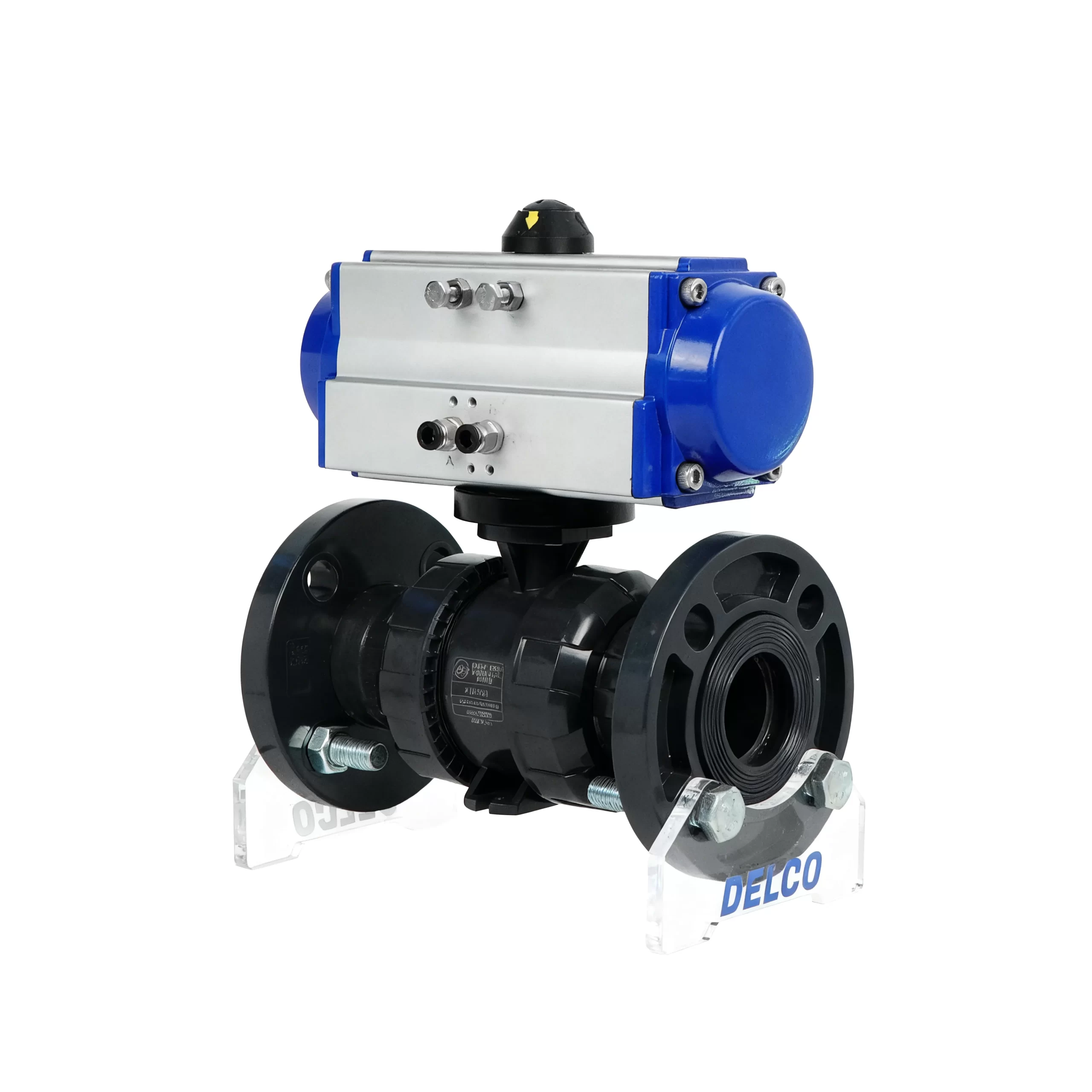
DK66-PVC Pneumatic UPVC Double Union Flange Ball Valve - High Integrity & Serviceable
 Size Range: DN15-DN100
Material: UPVC, CPVC,PPH,PVDF
Connection Standard: GB / ANSI / JIS /DIN
-
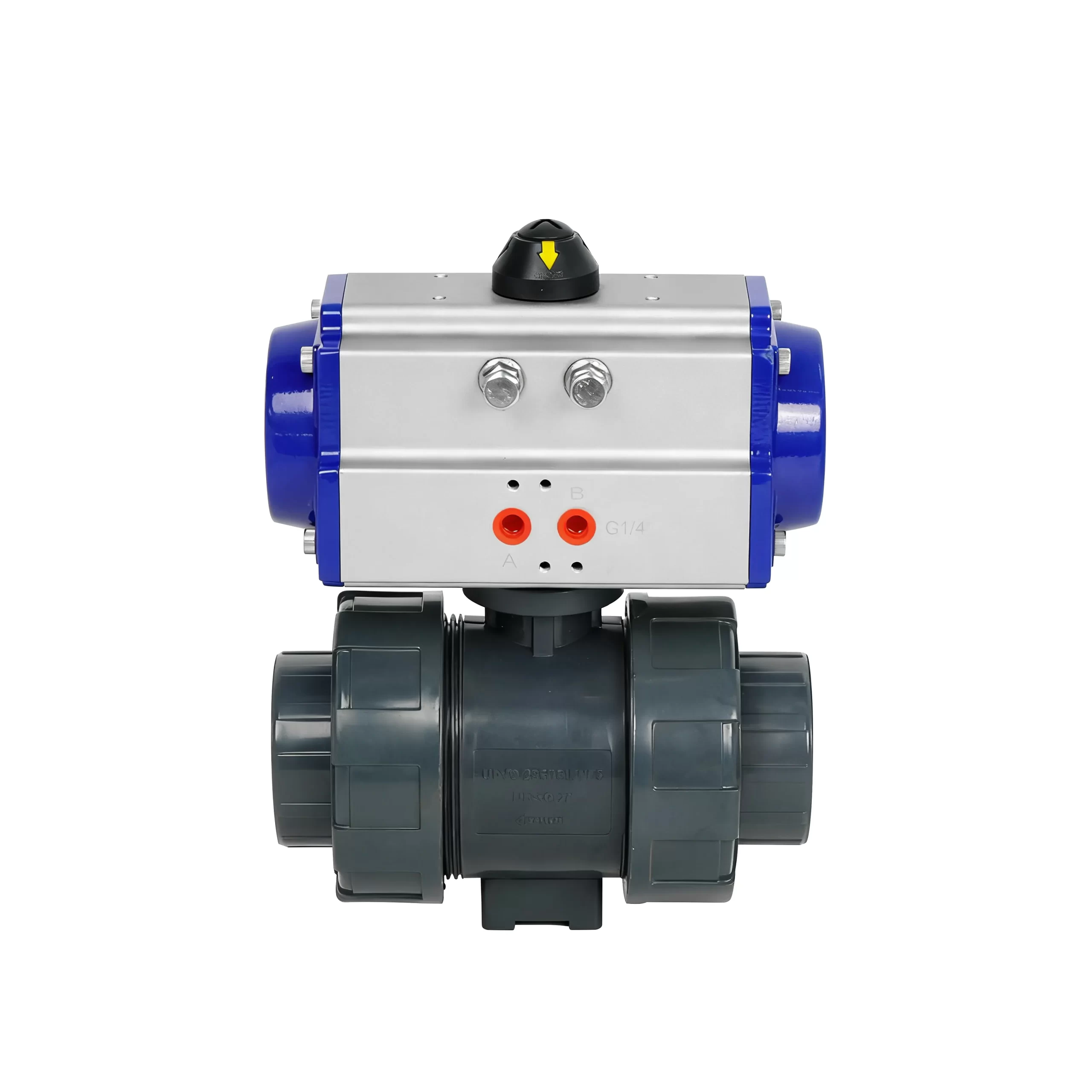
DK66-PL Pneumatic UPVC Double Union Ball Valve - Fast Corrosion-Resistant Shutoff
Size Range: DN15-DN100
Material: UPVC, CPVC,PPH,PVDF
Connection Type:BW, SW, Thread
-
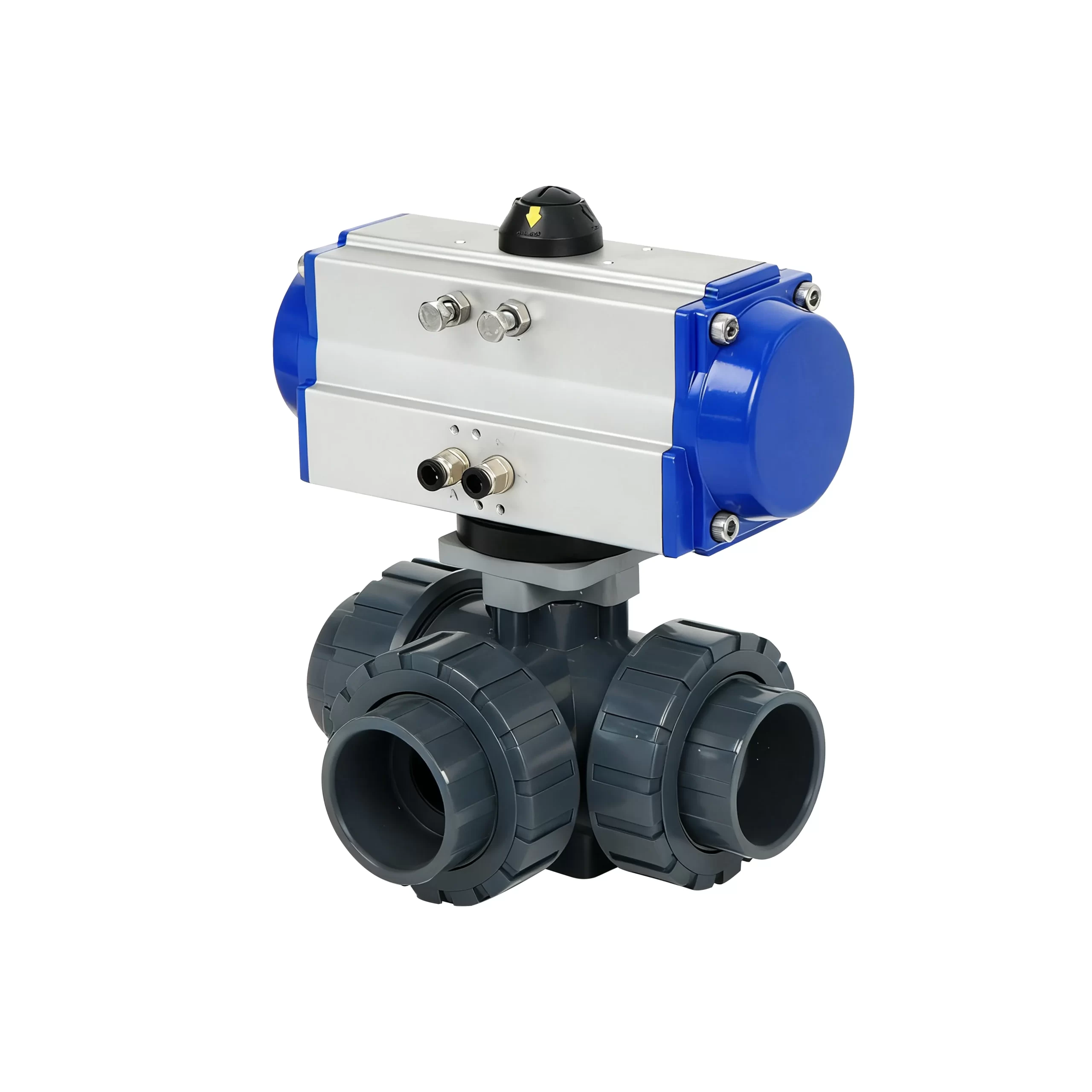
DK66-3PL Pneumatic 3-Way UPVC Double Union Ball Valve - Fast Corrosion-Resistant Switching
Size Range: DN15-DN50
Material: UPVC, CPVC,PPH,PVDF
Connection Type:BW, SW, Thread
Pneumatic Plastic Ball Valve: 100% Metal-Free Wetted Chemical Isolation
Engineered for highly aggressive acids, chlor-alkali fluids, electroplating baths, and high-purity deionized water, the Delco pneumatic ball valve plastic series eliminates metallic ion contamination and external galvanic corrosion. Combining precision-molded thermoplastic bodies with ultra-fast rack-and-pinion pneumatic actuators, these valves deliver 0.3-to-0.8-second emergency shutoff and continuous high-cycle performance in environments where exotic stainless steels or nickel alloys fail.
Engineering Advantages: Thermoplastic Pneumatic Automation
Solid virgin thermoplastic body, sphere, and blowout-proof stem with virgin PTFE seats and FKM/EPDM backup O-rings guarantee absolute zero metallic leaching.
Double union nuts allow swift removal of the valve body and pneumatic actuator from the pipeline for seal maintenance without cutting rigid plastic piping systems.
Weighing up to 70% less than equivalent metal valves, the assembly minimizes torsional stress and sag on plastic piping manifolds without costly auxiliary support brackets.
Pneumatic rack-and-pinion actuators cycle in 0.3 to 0.6 seconds under 0.5 MPa plant air, providing critical emergency isolation during hazardous chemical leak events.
Molded-in ISO 5211 mounting flange and dual stem-drive geometry enable direct actuator mounting without tall, heavy brackets, ensuring zero stem deflection.
Actuators feature hard-anodized extruded aluminum bodies with PTFE external coatings or optional engineered composite shells to withstand airborne chemical fumes.
Technical Specifications & Material Matrix
| Parameter | UPVC True Union | CPVC High-Temp | PVDF High-Purity | PPH Chemical Class |
|---|---|---|---|---|
| Nominal Diameter | DN15 – DN100 (1/2" – 4") | DN15 – DN100 (1/2" – 4") | DN15 – DN100 (1/2" – 4") | DN15 – DN100 (1/2" – 4") |
| Pressure Rating | PN10 / PN16 (150 psi @ 20°C) | PN10 / PN16 (150 psi @ 20°C) | PN10 / PN16 (150 psi @ 20°C) | PN10 (150 psi @ 20°C) |
| Operating Temp Range | -10°C to +60°C (14°F to 140°F) | -10°C to +95°C (14°F to 203°F) | -30°C to +140°C (-22°F to 284°F) | -10°C to +100°C (14°F to 212°F) |
| Wetted Sealing Trims | PTFE Seats + EPDM / FKM | PTFE Seats + FKM | Virgin PTFE + FFKM / FKM | PTFE Seats + EPDM / FKM |
| End Connections | Socket Weld (ASTM D2467, DIN 8063, JIS K6743), Female NPT/BSPT Threaded, or Flanged (ANSI 150# / DIN PN10) | |||
| Pneumatic Supply / Action | Filtered shop air 0.4 – 0.7 MPa (60 – 100 psi); Double-Acting (DA) or Single-Acting Spring-Return (SR Fail-Close/Fail-Open) | |||
| Standard Control Accessories | NAMUR Solenoid Valve (24VDC/220VAC), APL IP67/ATEX Limit Switch Box, Air Filter Regulator, 4-20mA EP Positioner | |||
Frequently Asked Questions: Pneumatic Plastic Ball Valves
Q1: How do you prevent stem shearing under high pneumatic actuator torque on plastic bodies?
Thermoplastic stems have lower shear strengths than metal alloys. Delco calculates actuator sizing with an engineered safety factor of 1.3x to 1.5x (avoiding over-sizing that strains the stem), utilizes double O-ring supported stems with blowout-proof shoulders, and uses precision CNC-machined ISO 5211 driving flats to distribute torsional loads evenly.
Q2: What is the main difference between UPVC and CPVC in pneumatic chemical service?
While both resist aggressive acids and bases, CPVC undergoes post-chlorination, increasing its heat deflection temperature from 60°C (UPVC limit) up to 95°C. CPVC is specified for hot chemical plating, wastewater digestion, and boiler chemical treatment where thermal spikes would soften UPVC piping.
Q3: Can pneumatic plastic ball valves handle water hammer from sub-second closure?
Rapid valve closure in rigid thermoplastic pipelines can generate severe pressure surges (water hammer) exceeding pipe burst ratings. When rapid shutoff is not an emergency requirement, Delco equips the pneumatic actuator with pneumatic exhaust speed controllers (flow control mufflers) to smoothly adjust stroking speed between 1.0 and 5.0 seconds.
Q4: How do True Union end connectors simplify automated line maintenance?
True union end designs feature threaded retaining nuts at both ends. Loosening these nuts allows the central valve body—along with its fully mounted pneumatic actuator, solenoid, and positioner—to slide directly out of the piping grid without cutting or disassembling adjacent solvent-welded or threaded piping.
Direct Factory Supply: Fast-Action Pneumatic Plastic Ball Valves
Delco stocks complete inventories of UPVC, CPVC, and PVDF true union valves assembled with rack-and-pinion pneumatic actuators. Fully hydro-tested, helium-leak checked, and bench calibrated with NAMUR controls for rapid chemical plant delivery.