




Pneumatic Sanitary Ball Valves
DELCO Pneumatic Sanitary Ball Valves are designed for high-purity applications in food, beverage, and pharmaceutical industries. Featuring polished stainless steel bodies and cavity-free seats, these air-operated valves ensure sterility and easy cleaning.


-
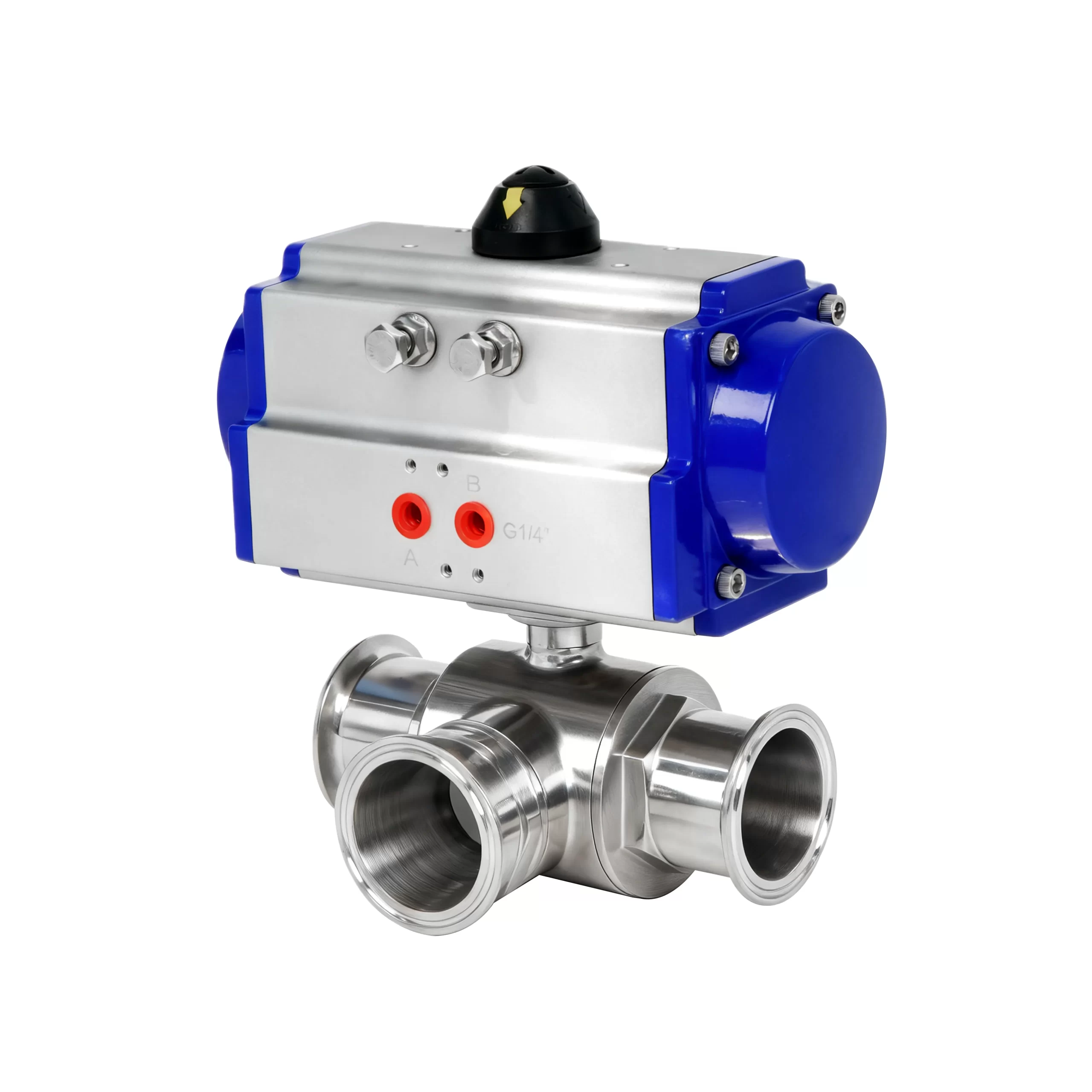
DK66-3WS Pneumatic 3-Way Sanitary Tri-Clamp Ball Valve - Fast CIP/SIP Automation
 Size Range: DN15-DN100
Material: SS304/SS316,SS304L/S316L
Connection:Butt-Weld / Tri-Clamp / Thread
-
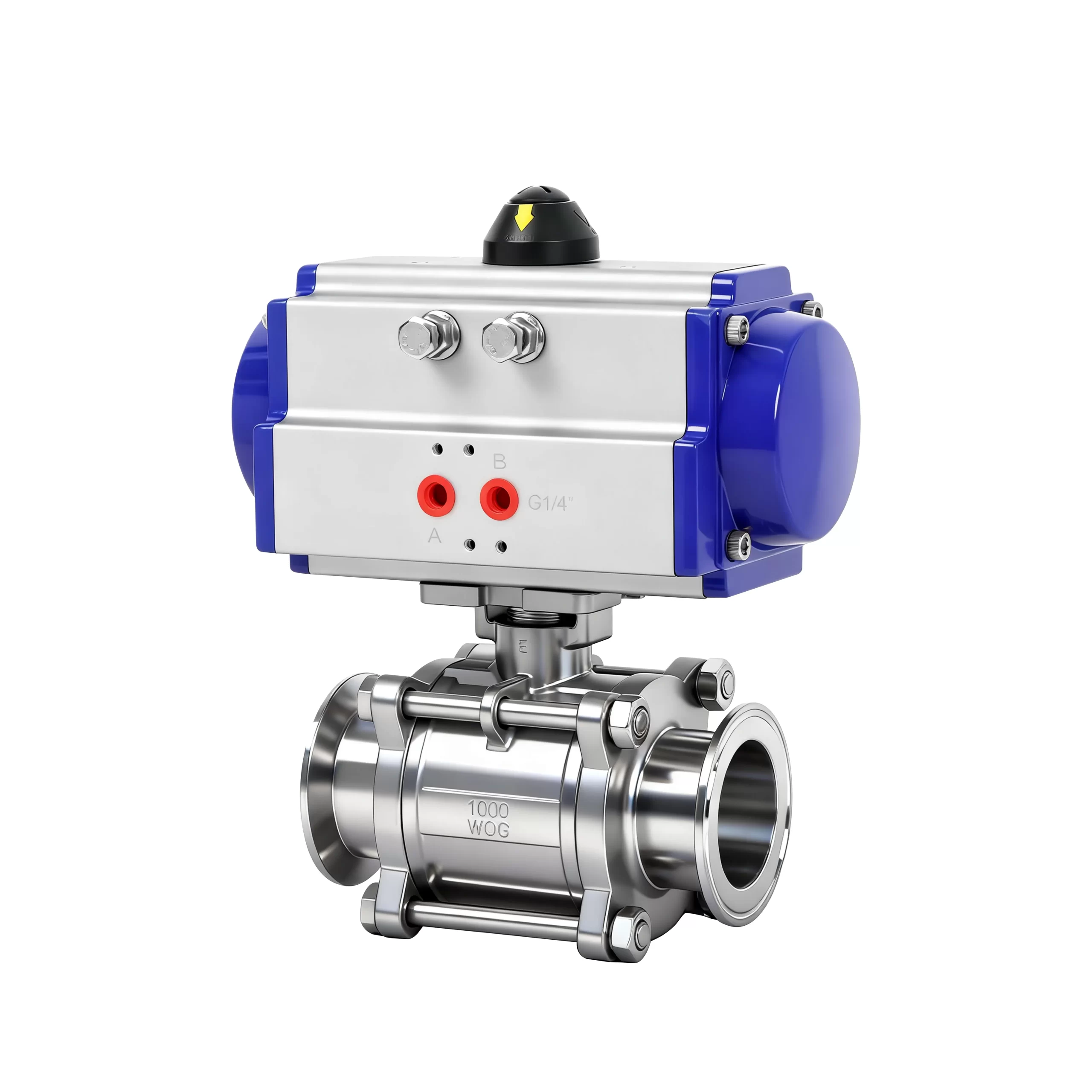
DK66-3PS-WK Pneumatic Sanitary Tri-Clamp Ball Valve - High-Speed Clean-In-Place Automation
Size Range: DN06-DN100
Material: WCB, Stainless Steel etc.
Connection: Butt-Weld / Tri-Clamp / Thread
-
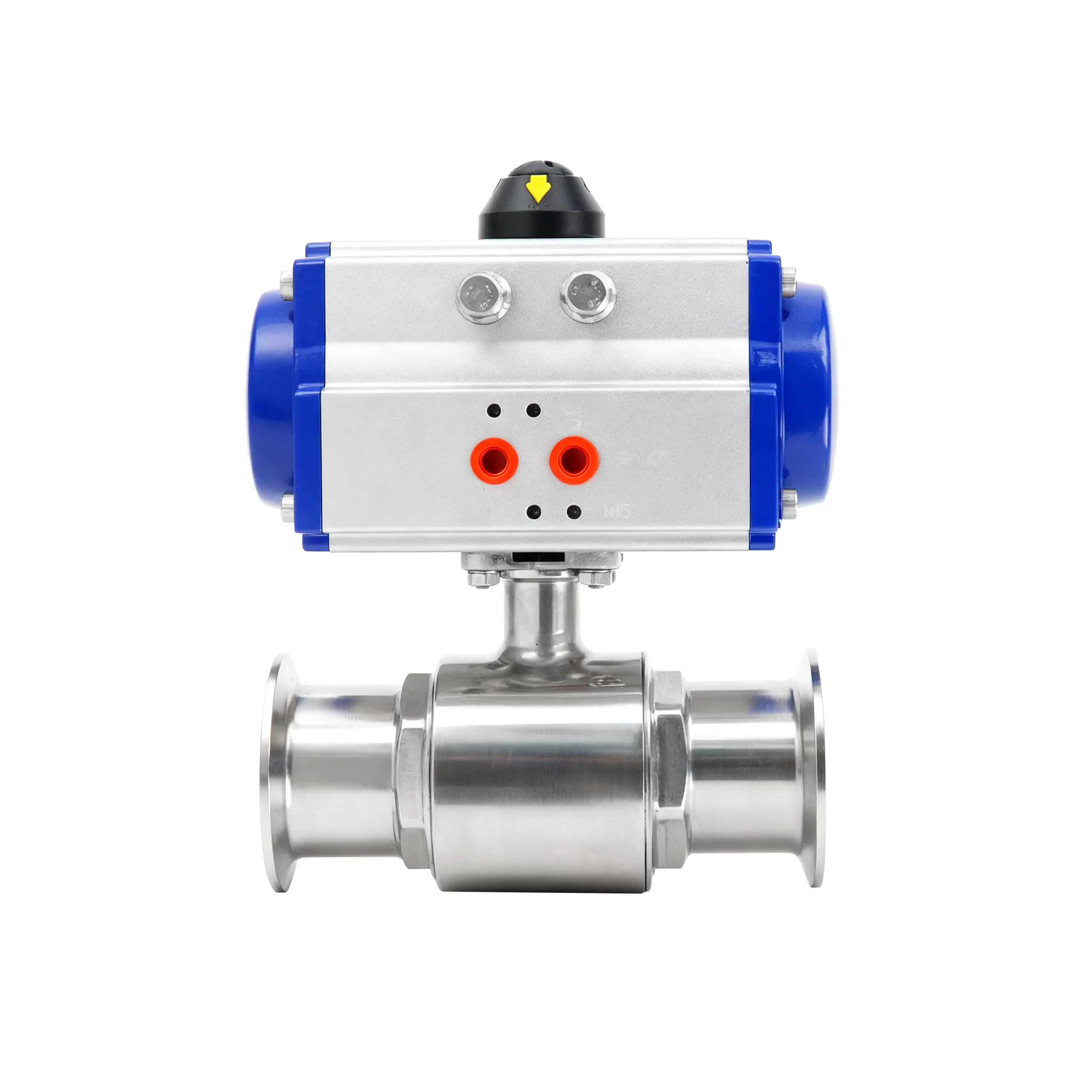
DELCO DK66-2WS Pneumatic Sanitary Tri-Clamp Ball Valve - High Purity
Size Range: DN15-DN100
Material: SS304/SS316,SS304L/S316L
Connection:Butt-Weld / Tri-Clamp / Thread
Pneumatic Sanitary Ball Valve: Aseptic Tri-Clamp & Cavity-Filled Automation
Specifically engineered for biopharmaceutical, aseptic food processing, dairy, and pure beverage facilities, the Delco pneumatic ball valve sanitary series provides fully cleanable, zero-retention fluid isolation. Built from forged AISI 316L stainless steel with electropolished surface finishes (Ra ≤ 0.4 μm) and cavity-filled virgin PTFE seats, these valves guarantee complete drainability and resist repeated Clean-in-Place (CIP) and Steam-in-Place (SIP) sterilization cycles under high-speed pneumatic command.
Technical Merits: Aseptic Design & Sanitary Automation
Internal surfaces are precision electropolished to Ra ≤ 0.4 μm (15 μin), eliminating microscopic crevices where biofilms, microbial cultures, or proteins adhere.
Specially contoured PTFE cavity fillers close the annular void between the ball and valve body, preventing media trapping and souring during batch turnovers.
High-grade virgin PTFE and compounded TFM1600 seals withstand continuous Clean-in-Place (CIP) chemicals and live steam SIP sterilization up to 150°C (302°F).
Actuators are available with epoxy coatings, stainless steel fasteners, or complete AISI 304/316 polished stainless steel housings to resist high-pressure washdown.
True full-bore internal diameter matches sanitary tubing I.D. exactly, eliminating turbulence, preventing product shear, and enabling pigs for pipeline recovery.
All wetted elastomers and polymers comply with FDA 21 CFR 177.1550, USP Class VI biological reactivity tests, and 3-A Sanitary Standards for complete validation.
Sanitary Engineering Specifications Matrix
| Parameter | Tri-Clamp Standard | ASME BPE Weld-End | 3-Way Sanitary Diverter |
|---|---|---|---|
| Size Range | 1/2" – 4" (DN15 – DN100) | 1/2" – 4" (DN15 – DN100) | 1/2" – 3" (DN15 – DN80) |
| Body & Trim Material | Forged AISI 316L (1.4404 / CF3M) | Forged AISI 316L (Low sulfur 0.005-0.017%) | Forged AISI 316L (1.4404) |
| Internal Surface Polish | Ra ≤ 0.51 μm (Mechanical Polish) | Ra ≤ 0.38 μm (ASME BPE SF4 Electropolish) | Ra ≤ 0.51 μm (Mechanical Polish) |
| Working Pressure | 10 Bar (1.0 MPa / 145 psi) | 10 Bar (1.0 MPa / 145 psi) | 10 Bar (1.0 MPa / 145 psi) |
| Operating Temp Range | -20°C to +150°C (Steam CIP/SIP) | -20°C to +150°C (Continuous SIP) | -20°C to +130°C (Standard CIP) |
| End Connections | Quick-Release Tri-Clamp (ISO 2852 / 3A) | Extended Tube Butt Weld (ASME BPE) | Tri-Clamp / Sanitary Union |
| Actuator & Automation | Pneumatic Rack & Pinion / Stainless Steel Washdown; DA / SR Fail-Safe; NAMUR Solenoid; Sanitary Valve Control Top | ||
| Compliance & Certifications | FDA 21 CFR 177.1550, USP Class VI, 3-A Sanitary Standards, EN 10204 3.1 Material Traceability | ||
Frequently Asked Questions: Sanitary Pneumatic Automation
Q1: Why are cavity-filled seats mandatory in hygienic food and pharmaceutical ball valves?
In conventional ball valves, a dead cavity exists between the ball outer surface and body chamber. When handling milk, sugars, or biological media, product collects in this dead space, fermenting and contaminating subsequent batches. Cavity-filled seats completely occupy this space, guaranteeing clean drainage during CIP rinse cycles.
Q2: What is the benefit of low-sulfur 316L in ASME BPE orbital weld ends?
ASME BPE specifies a controlled sulfur range (0.005% to 0.017%) for orbital weld ends. This precise chemistry controls weld pool surface tension and bead penetration, preventing weld bead wandering and ensuring full-penetration, pit-free orbital welds required by pharmaceutical audit standards.
Q3: How does the pneumatic actuator endure aggressive caustic washdown routines?
Delco provides sanitary pneumatic actuators featuring hard-anodized bodies with polyurethane topcoats or optional 100% AISI 304/316 stainless steel housings. Exhaust ports include sintered stainless steel breather breathers or routed tubing to prevent caustic washdown ingress into internal pneumatic chambers.
Q4: What control tops are available for sanitary automation skids?
Beyond traditional NAMUR solenoid valves and limit switches, Delco integrates compact hygienic control tops. These incorporate an internal solenoid, optical stroke feedback, and AS-Interface, DeviceNet, or IO-Link digital bus communication within a sealed IP67/IP69K dome housing designed for cleanroom environments.
Factory Direct Supply: ASME BPE & 3-A Sanitary Pneumatic Valves
Direct manufacturer pricing on forged 316L sanitary ball valves. Pre-assembled with pneumatic actuators and calibrated control tops, cleanroom bagged, and backed by EN 10204 3.1 certification and FDA validation packages.