



 Home /
 Check Valve (NRV): Types and Selection Guide
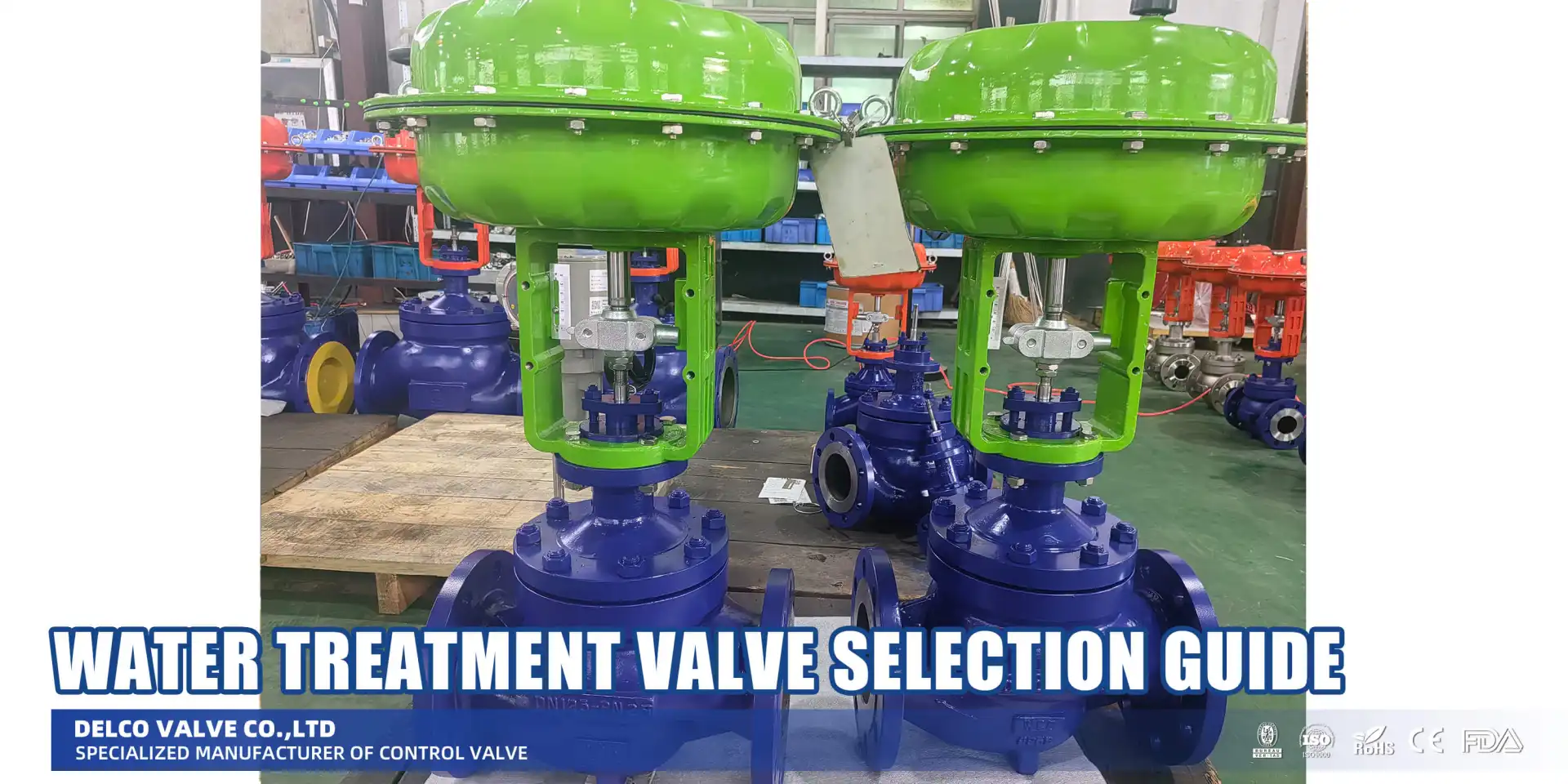
Water Treatment Valve Selection Guide: Engineering Reliability and Compliance
Sep 28, 2026
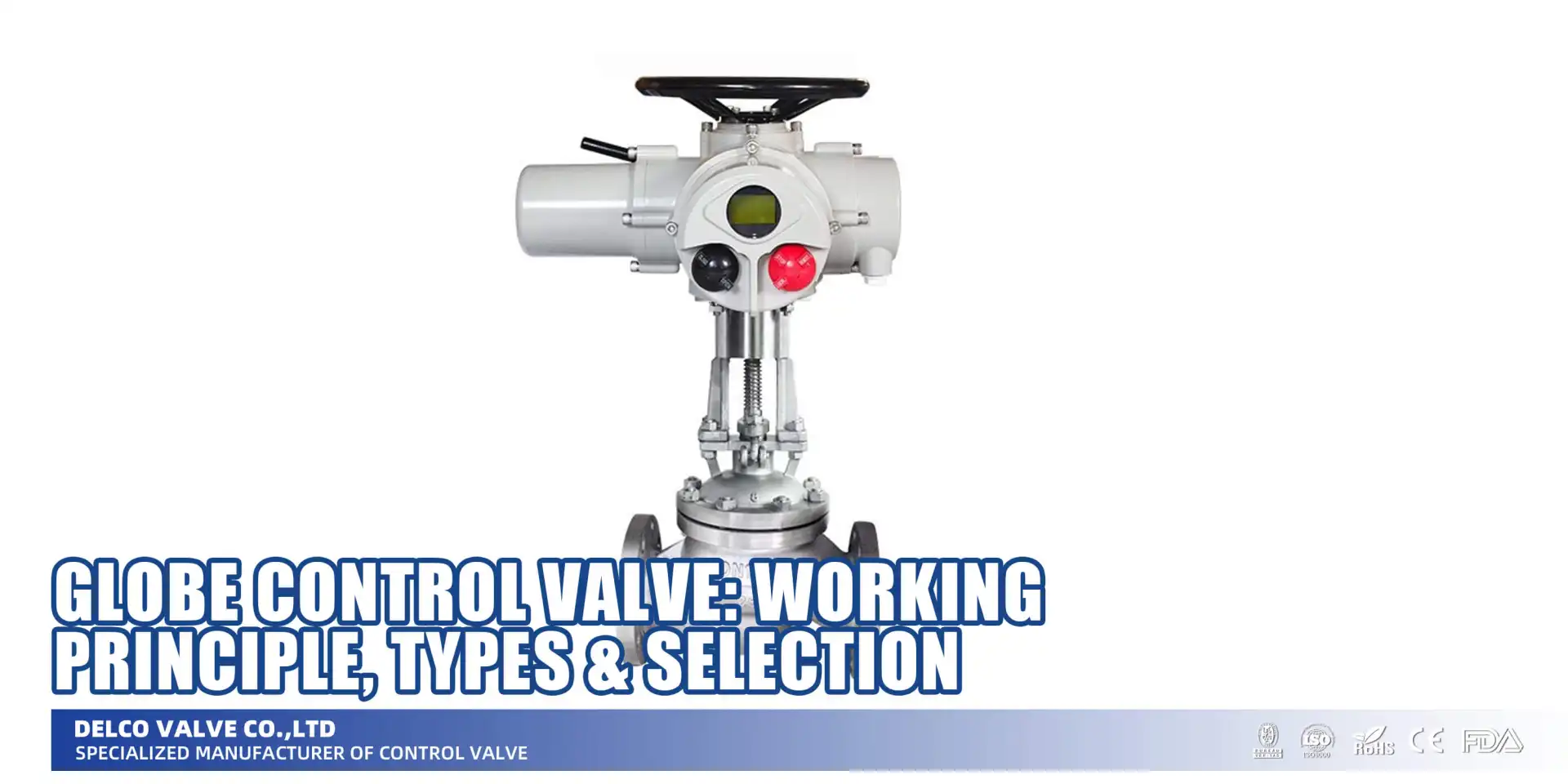
Globe Control Valve: Working Principle, Types & Selection Guide
Sep 24, 2026
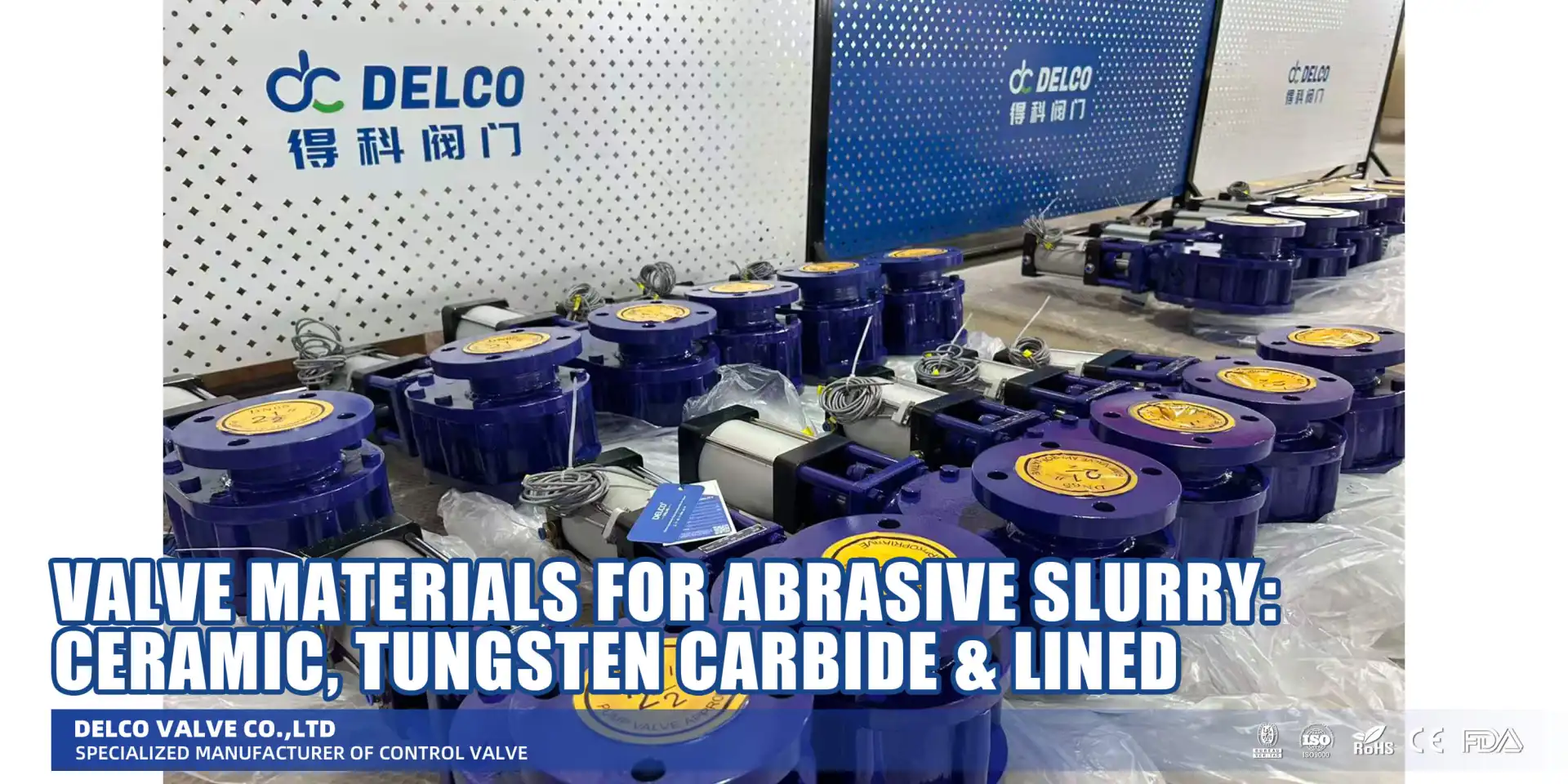
Valve Materials for Abrasive Slurry: Ceramic, Tungsten Carbide & Lined
Sep 22, 2026
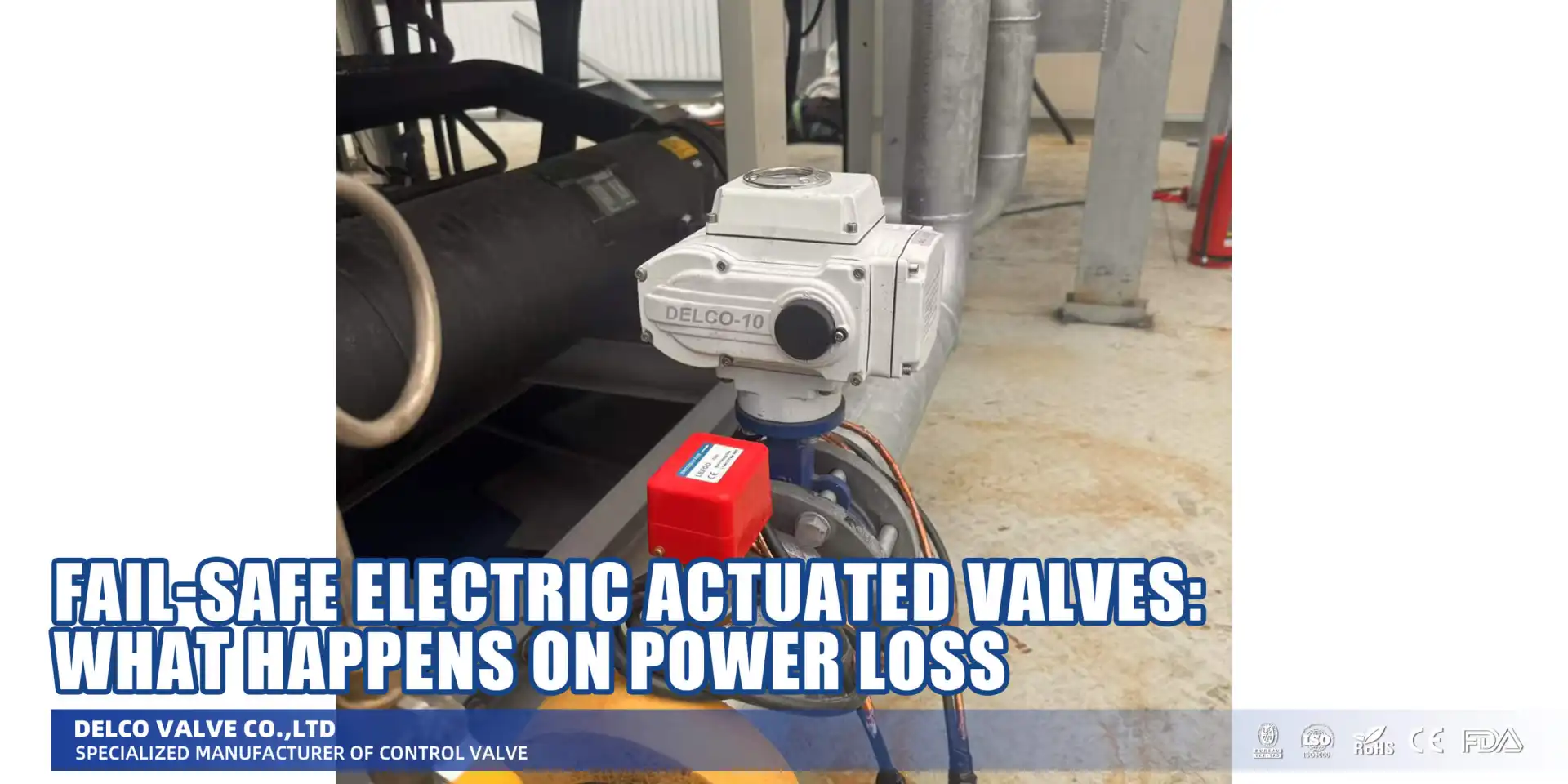
Fail-Safe Electric Actuated Valves: What Happens on Power Loss
Sep 17, 2026
A single check valve failure can cause catastrophic backflow, destroy pumps, and shut down an entire system. In this guide, you'll learn how check valves work, explore every major type, and get a practical framework for selecting the right one — so your system stays protected around the clock.
What Is a Check Valve (NRV)?
A check valve — also known as a non-return valve (NRV), one-way valve, or clack valve — is a self-actuating valve that allows fluid to flow in one direction only and automatically prevents reverse flow (backflow).
Unlike gate valves or ball valves that require an operator or actuator to open and close, a check valve operates entirely on its own. It uses the energy of the flowing fluid (pressure and velocity) to open, and closes automatically when the flow stops or reverses.
Check Valve vs. Non-Return Valve — Is There a Difference?
In practice, no. They are the same device. The terminology varies by region and industry:
| Term | Common Usage |
|---|---|
| Check Valve | North America, international engineering standards |
| Non-Return Valve (NRV) | UK, India, South Africa, Commonwealth countries |
| Clack Valve | Older/traditional terminology |
| One-Way Valve | General/consumer terminology |
Throughout this article, we use "check valve" and "NRV" interchangeably — because functionally, they are identical.
Why Are Check Valves Critical?
Check valves serve as silent guardians in piping systems. Without them:
- Reverse flow could damage or destroy pumps and compressors
- Contaminated fluid could backflow into clean supply lines
- Sudden flow reversal could cause water hammer — a destructive pressure surge that can rupture pipes and fittings
- Gravity-fed systems would lose prime and drain backward
In short, a properly selected check valve is one of the most cost-effective forms of system protection you can install.
Key Components of a Check Valve
While internal designs vary by type, most check valves share these core components:
| Component | Function |
|---|---|
| Body | The main pressure-containing shell. Provides the flow passage and houses all internal parts. Materials include WCB carbon steel, CF8M stainless steel, bronze, and cast iron. |
| Disc / Clapper | The moving element that opens to allow forward flow and closes to block reverse flow. In swing checks, this is a hinged disc; in lift checks, it's a piston-style plug. |
| Seat | The precision-machined surface against which the disc seals when closed. The disc-seat interface determines the valve's leak-tightness. |
| Hinge Pin / Shaft | In swing and tilting disc designs, this pin acts as the pivot point for the disc's swinging motion. |
| Spring (where applicable) | In spring-loaded designs (dual plate, non-slam, silent check), the spring assists in fast closing to minimize water hammer. |
| Cover / Bonnet | The access plate or cap that allows inspection and maintenance of internal components without removing the valve from the pipeline. |
How Does a Check Valve Work?
The working principle of a check valve is elegantly simple — it relies on differential pressure rather than external actuation.
Opening
When the upstream pressure exceeds the downstream pressure (i.e., fluid flows in the intended direction), the pressure difference pushes the disc off the seat, opening the valve and allowing flow to pass through.
Closing
When the flow stops or reverses, the downstream pressure plus gravity (and spring force in spring-loaded designs) pushes the disc back against the seat, sealing the valve and blocking backflow.
The Key Concept: Cracking Pressure
Cracking pressure is the minimum upstream pressure required to open the check valve. This is an important specification because:
- A valve with too high a cracking pressure may restrict normal flow
- A valve with too low a cracking pressure may not close reliably
- Spring-loaded check valves have higher and more predictable cracking pressures than un-sprung designs
Important: No external power, actuator, or operator is needed. A check valve is a fully passive, automatic device — making it one of the most reliable components in any piping system.
Types of Check Valves
There are several check valve designs, each optimized for specific operating conditions. Here are the six most common types used in industrial applications:
1. Swing Check Valve
The most widely used check valve design. A disc is mounted on a hinge pin at the top of the valve body and swings open when forward flow pushes against it.
- Flow path: Full bore, unobstructed — provides the lowest pressure drop of all check valve types
- Closing mechanism: Gravity + reverse flow pressure (no spring)
- Sizes: DN50–DN1200+
- Limitation: Slower closing speed makes it prone to water hammer in systems with rapid flow reversal or frequent pump cycling
Best for: Large-diameter pipelines, gravity-fed systems, water/wastewater, and applications where minimizing pressure loss is the top priority.
👉 Explore DELCO Swing Check Valves
2. Lift Check Valve
The disc moves vertically (lifts up) off the seat, guided by the valve body — similar in principle to a globe valve. The disc is typically piston-shaped or ball-shaped.
- Flow path: Tortuous (Z-shaped, like a globe valve) — higher pressure drop
- Closing mechanism: Gravity + reverse flow (very fast response)
- Sizes: DN15–DN300 (typically smaller sizes)
- Advantage: Excellent sealing performance and fast closing — highly effective at preventing water hammer
Best for: High-pressure systems, small-diameter piping, steam lines, and applications with pulsating or rapidly reversing flow.
👉 Explore DELCO Lift Check Valves
3. Dual Plate (Wafer) Check Valve
A compact design featuring two semicircular (D-shaped) plates mounted on a central hinge pin, with torsion springs that assist rapid closing. The wafer body fits between two pipe flanges.
- Flow path: Relatively streamlined through two half-moon openings
- Closing mechanism: Spring-assisted — very fast closing, minimal water hammer
- Sizes: DN50–DN600
- Advantage: Extremely compact and lightweight — up to 80% lighter and 70% shorter than a flanged swing check valve of the same size
Best for: Pump discharge lines, offshore platforms, skid-mounted systems, and any application where space, weight, and water hammer prevention are critical.
👉 Explore DELCO Dual Plate Check Valves
4. Tilting Disc Check Valve
A hybrid between swing and dual plate designs. The disc is mounted on a pivot point near its center (rather than the top edge), allowing it to tilt open and close with a shorter stroke.
- Flow path: Near full-bore — low pressure drop
- Closing mechanism: Weight-balanced + spring-assisted — disc closes before flow fully reverses
- Sizes: DN100–DN600
- Advantage: Combines the low pressure drop of a swing check with the fast closing of a spring-loaded design
Best for: Large pump stations, power plants, and critical pipeline applications where both low pressure loss and water hammer protection are needed.
5. Non-Slam (Silent) Check Valve
A spring-loaded design where a center-guided disc is held against the seat by a spring. Flow must overcome the spring force to open the valve.
- Flow path: Axial — fluid flows straight through
- Closing mechanism: Strong spring — disc closes before flow reversal occurs, eliminating slam entirely
- Sizes: DN25–DN500
- Advantage: The fastest closing of all check valve types — virtually eliminates water hammer
Best for: Critical pump protection, systems with frequent start/stop cycles, high-rise buildings, and applications where zero tolerance for water hammer is required.
6. Ball Check Valve
Uses a free-floating ball as the closing element. When flow pushes the ball off the seat, the valve opens; when flow reverses, the ball returns to the seat.
- Flow path: Simple, with minimal dead zones
- Closing mechanism: Gravity + reverse flow
- Sizes: DN15–DN100 (typically small sizes)
- Advantage: Self-cleaning — the ball rotates and shifts, preventing debris from embedding in the seat
Best for: Wastewater, slurries, viscous fluids, and applications with solids-laden media that would clog other check valve designs.
Check Valve Comparison Table
Choosing between check valve types? Use this quick-reference comparison:
| Feature | Swing Check | Lift Check | Dual Plate | Tilting Disc | Non-Slam (Silent) | Ball Check |
|---|---|---|---|---|---|---|
| Pressure drop | ⭐ Very low | High | Medium | Low | Medium | Medium |
| Closing speed | Slow | Fast | Fast | Fast | ⭐ Fastest | Medium |
| Water hammer risk | ⚠️ High | Low | Low | Low | ⭐ Lowest | Medium |
| Size range | DN50–1200+ | DN15–300 | DN50–600 | DN100–600 | DN25–500 | DN15–100 |
| Weight / Space | Heavy/Long | Medium | ⭐ Lightest | Medium | Medium | Compact |
| Solids tolerance | Good | Poor | Poor | Fair | Poor | ⭐ Best |
| Installation | Horizontal | Horizontal (lift), Vertical (piston) | Any orientation | Horizontal | Horizontal / Vertical | Any orientation |
| Typical cost | Low | Low–Medium | Medium | Medium–High | Medium–High | Low |
| Best application | General, large lines | High-pressure, small lines | Pump discharge, tight spaces | Large pump stations | Critical pump protection | Wastewater, slurries |
Rule of Thumb: If your biggest concern is pressure drop → Swing Check. If your biggest concern is water hammer → Non-Slam or Dual Plate. If you're tight on space → Dual Plate (Wafer).
How to Select the Right Check Valve
Selecting the right check valve requires matching the valve's characteristics to your system's specific demands. Follow this step-by-step framework:
Step 1: Identify the Primary Threat
Ask yourself: What is the biggest risk if this valve fails or performs poorly?
| Primary Concern | Recommended Type |
|---|---|
| Water hammer / pressure surge | Non-Slam, Dual Plate, or Tilting Disc |
| High pressure drop / energy cost | Swing Check or Y-Pattern Lift Check |
| Limited installation space | Dual Plate (Wafer) |
| Solids or debris in fluid | Ball Check or Swing Check |
| High-pressure / small-bore line | Lift Check |
| Frequent pump start/stop | Non-Slam (Silent) Check |
Step 2: Define Process Conditions
Gather these critical parameters before selecting or sizing:
- Medium: Water, steam, oil, gas, chemicals, slurry?
- Flow rate: Maximum, minimum, and normal operating flow
- Pressure: Line pressure, maximum allowable pressure drop
- Temperature: Operating range and maximum temperature
- Flow velocity: Minimum velocity to keep the disc fully open (under-velocity causes disc flutter, which accelerates wear)
Step 3: Select the Right Material
| Application | Body Material | Disc / Trim Material |
|---|---|---|
| Water / General service | WCB Carbon Steel / Cast Iron | 13Cr Stainless Steel |
| Steam (≤425°C) | WCB / WC6 Carbon Steel | Stellite-faced |
| Corrosive chemicals | CF8M (316 SS) / Duplex SS | Hastelloy / Monel |
| Seawater / Marine | Bronze (C95800) / Duplex SS | Monel / Duplex SS |
| Cryogenic (down to −196°C) | LCB / LCC Low-Temp Steel | 316 SS |
| Wastewater / Slurry | Ductile Iron / Rubber-lined | Rubber-coated disc |
Step 4: Determine Sizing Requirements
Unlike control valves (which regulate flow), check valves are sized to ensure:
- Full disc opening at normal flow — An undersized valve has excessive pressure drop; an oversized valve doesn't fully open, causing disc flutter (the disc oscillates, leading to rapid wear and premature failure)
- Acceptable pressure drop — Calculate the pressure loss through the valve at your design flow rate using the manufacturer's Cv or Kv data
- Minimum velocity — Ensure the fluid velocity at normal flow exceeds the valve's minimum velocity for stable operation (typically 1.5–3 m/s for liquids in swing checks)
⚠️ Common Mistake: Selecting a check valve based only on pipe size. The valve should be sized based on flow velocity, not just pipe diameter. An oversized check valve is often worse than an undersized one.
Step 5: Consider Installation Orientation
Not all check valves can be installed in all orientations:
| Type | Horizontal | Vertical (flow up) | Vertical (flow down) |
|---|---|---|---|
| Swing Check | ✅ | ✅ (with counterweight) | ❌ |
| Lift Check (piston) | ✅ | ✅ | ❌ |
| Dual Plate | ✅ | ✅ | ✅ |
| Tilting Disc | ✅ | ❌ | ❌ |
| Non-Slam (Silent) | ✅ | ✅ | ❌ |
| Ball Check | ✅ | ✅ | ✅ |
Step 6: Verify Standards & Certifications
- Design standards: API 594 (wafer/dual plate), API 6D (pipeline), BS 1868 (swing check), BS 1873 (lift check)
- Pressure-temperature ratings: ASME B16.34
- Testing: API 598 (inspection and testing)
- Marine certifications: DNV, BV, Lloyd's, CCS (for shipboard applications)
Selection Checklist
✅ Primary threat identified (water hammer vs. pressure drop vs. space)
✅ Check valve type selected
✅ Process conditions defined (medium, flow, pressure, temperature)
✅ Materials compatible with medium and temperature
✅ Valve sized by flow velocity (not just pipe size)
✅ Installation orientation confirmed
✅ Standards and certifications verified
Need Expert Help? DELCO Valves engineers can help you select and size the right check valve for your specific system requirements. Contact us for free technical consultation →
Common Applications by Industry
Check valves are found in virtually every industry that moves fluids. Here's where each type is commonly deployed:
🏭 Oil & Gas / Petrochemical Pump discharge protection, pipeline backflow prevention, compressor outlet lines, and wellhead systems — requiring high-pressure rated swing, dual plate, or tilting disc check valves in corrosion-resistant alloys.
⚡ Power Generation Boiler feedwater lines, condensate return, cooling water circuits, and fuel supply systems — where water hammer prevention is critical and non-slam or tilting disc designs are preferred.
💧 Water & Wastewater Pump station discharge, distribution system backflow prevention, and sewage lift stations — ball check valves are favored for solids-laden wastewater, while dual plate designs protect clean water pumps.
🚢 Marine & Shipbuilding Seawater cooling lines, fuel oil systems, bilge and ballast systems — requiring marine-certified check valves (DNV, BV, CCS) in bronze or duplex stainless steel.
🌡️ HVAC & Building Services Chilled water and heating circuits, domestic hot water recirculation, and high-rise plumbing — silent (non-slam) check valves prevent pressure surges from pump cycling.
🧪 Chemical Processing Dosing pump outlets, reactor feed lines, and chemical transfer — requiring corrosion-resistant materials (SS316, Hastelloy, PTFE-lined) and tight sealing to prevent cross-contamination.
Installation & Maintenance Tips
Proper installation and maintenance are critical to check valve performance and longevity:
Installation Best Practices
- Flow direction: Always verify the flow arrow on the valve body — installing backward is a surprisingly common and costly error
- Upstream straight run: Allow 5–10 pipe diameters of straight pipe upstream to ensure stable flow patterns at the disc
- Orientation: Confirm the selected valve type supports your installation orientation (see comparison table above)
- Support: Large swing check valves are heavy — provide adequate pipe support to prevent stress on flanged connections
- Accessibility: Install with sufficient clearance for future inspection and disc replacement
Common Problems & Solutions
| Problem | Likely Cause | Solution |
|---|---|---|
| Disc flutter / chatter | Valve oversized; flow velocity too low | Re-size the valve for actual flow velocity; install a smaller valve |
| Water hammer / slam | Slow-closing design (swing check) in pump discharge | Replace with non-slam or dual plate check valve |
| Reverse leakage | Seat damage, corrosion, or debris on sealing surface | Inspect and lap (re-machine) seats; replace disc if damaged |
| Stuck open | Corrosion, debris, or hinge pin seizure | Disassemble, clean, and inspect; replace corroded components |
| Excessive pressure drop | Wrong type selected; internal obstruction | Verify sizing; consider switching to a lower-resistance design (swing or tilting disc) |
Preventive Maintenance Schedule
- Every 6–12 months: Visual inspection, check for external leaks, verify smooth operation
- Every 2–3 years: Internal inspection — examine disc, seat, hinge pin, and spring condition
- Every 5 years (or as needed): Full overhaul — replace wear parts (disc, seat, springs, seals)
Tip: DELCO Valves provides spare parts and technical support for all our check valve products.
Frequently Asked Questions (FAQ)
Q: What is the difference between a check valve and a non-return valve (NRV)?
A: There is no functional difference. "Check valve" and "non-return valve" (NRV) refer to the same device — a self-actuating, one-way valve that allows flow in one direction and automatically blocks reverse flow. The term "check valve" is more common in North America, while "non-return valve" or "NRV" is widely used in the UK, India, and other regions. When searching for products, both terms are interchangeable.
Q: How do I prevent water hammer caused by check valves?
A: Water hammer occurs when a check valve closes too slowly, allowing reverse flow to build momentum before the disc slams shut. To prevent it: (1) Use a non-slam (silent) check valve or dual plate check valve — both have spring-assisted fast closing that stops reverse flow before it starts. (2) Avoid oversizing — an oversized valve takes longer to close. (3) In critical applications, consider adding a surge relief valve or accumulator as additional protection.
Q: Can a check valve be installed vertically?
A: It depends on the type. Dual plate (wafer) check valves and ball check valves can be installed in any orientation, including vertical. Swing check valves can work vertically (flow upward) if equipped with a counterweight or spring. Lift check valves (piston type) are specifically designed for vertical upward flow. Tilting disc and standard swing checks generally require horizontal installation. Always verify with the manufacturer's installation guidelines.
Q: What happens if a check valve is installed backward?
A: If installed backward, the valve will be permanently closed — completely blocking all flow in the intended direction. The system will experience zero flow or extreme pressure buildup upstream of the valve, potentially damaging pumps, bursting pipes, or triggering safety relief devices. Always check the flow direction arrow cast or stamped on the valve body before installation.
Q: How do I know if my check valve is oversized?
A: The most common symptom of an oversized check valve is disc flutter — the disc rapidly oscillates between open and partially closed positions because the flow velocity is too low to hold it fully open. This causes: premature disc and seat wear, noise and vibration, reduced service life, and unreliable backflow prevention. The solution is to size the valve based on flow velocity, not just pipe diameter. Consult the manufacturer's minimum velocity data for the specific valve model.
Conclusion
Check valves may be the simplest valves in your system, but choosing the wrong one can lead to pump damage, water hammer, system downtime, and costly repairs. The right selection depends on understanding your system's specific threats — whether that's pressure surge, energy loss, space constraints, or contaminated backflow.
Here's the quick decision framework:
- Need lowest pressure drop? → Swing Check Valve
- Need fastest closure / anti-water hammer? → Non-Slam or Dual Plate Check Valve
- Tight on space? → Dual Plate (Wafer) Check Valve
- Handling solids or slurry? → Ball Check Valve
- High-pressure, small-bore? → Lift Check Valve
- Large pump station, balanced performance? → Tilting Disc Check Valve
At DELCO Valves, we manufacture a complete range of check valves — including swing check, lift check, dual plate, non-slam, ball check, and marine-certified designs — engineered for reliable backflow protection in the world's most demanding industries.
Protect Your System with the Right Check Valve
📥 Download Our Check Valve Product Catalog (PDF)
Share on Social:


Contact Us
In This Article
Water Treatment Valve Selection Guide: Engineering Reliability and Compliance
Sep 28, 2026
Globe Control Valve: Working Principle, Types & Selection Guide
Sep 24, 2026
Valve Materials for Abrasive Slurry: Ceramic, Tungsten Carbide & Lined
Sep 22, 2026
Fail-Safe Electric Actuated Valves: What Happens on Power Loss
Sep 17, 2026