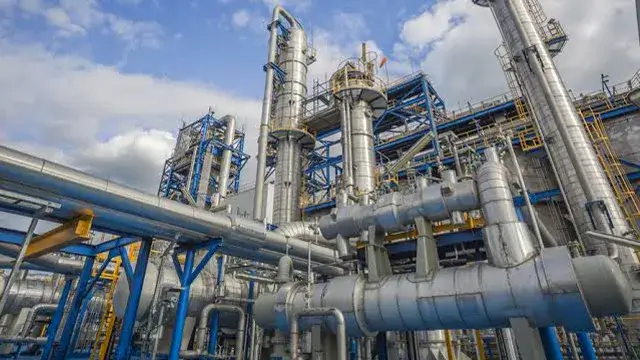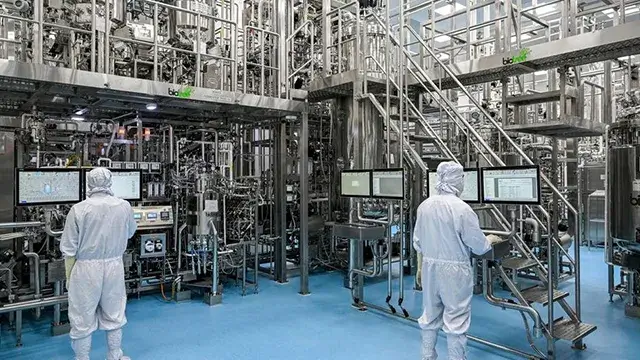
Pharmaceutical Valve Solutions: A Comprehensive Guide
Unlike general industrial or utility piping, valve selection in a pharmaceutical facility is strictly governed by biological sterility, zero-crevice geometry, cleanability, and regulatory traceability: from high-purity Water for Injection (WFI) loop circulation and Clean-in-Place/Steam-in-Place (CIP/SIP) circuits to bioreactor inoculation, sterile harvest, and solvent-based API crystallization.
Everything below reflects configurations we forge, machine, electropolish, cleanroom-assemble, bench-test, and export as DELCO Valve—a specialized sanitary and severe-service flow control manufacturer with 20+ years of high-purity engineering experience.
The Short Selection Summary
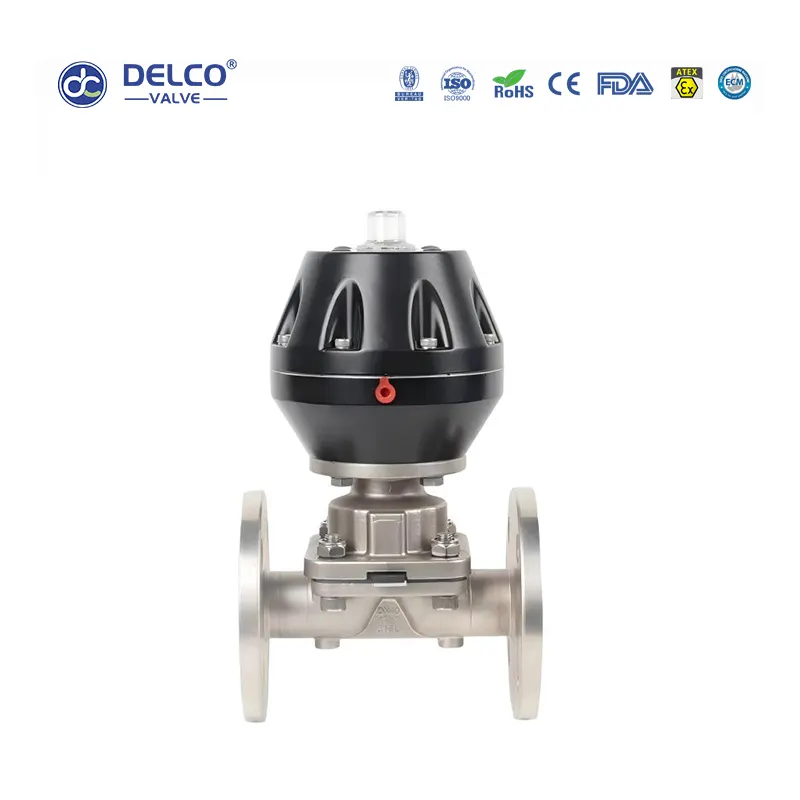
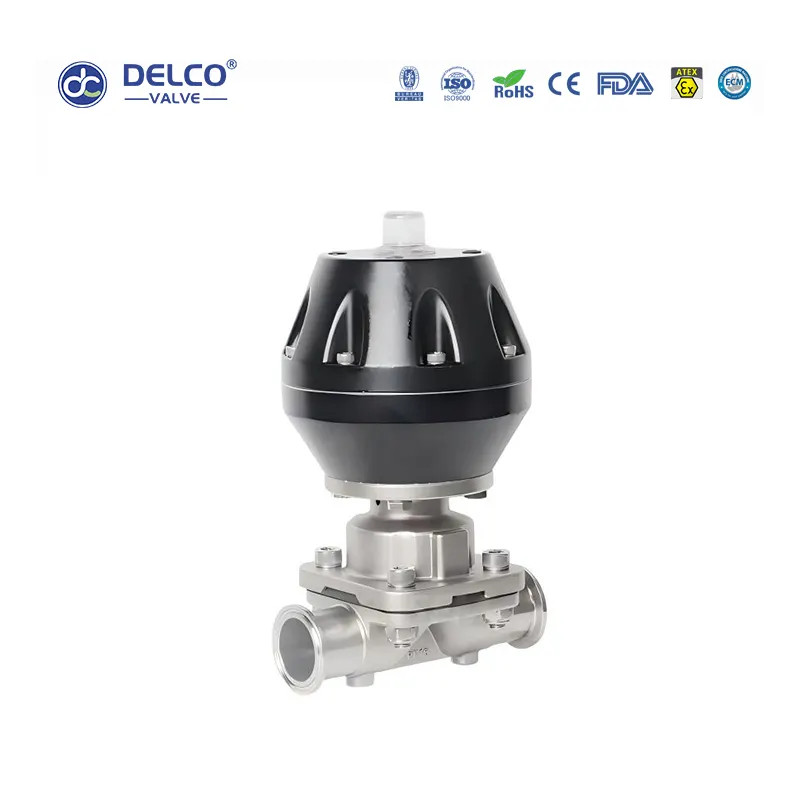
- Water for Injection (WFI) & Sterile Bioprocessing: Forged 316L sanitary diaphragm valves (weir-type and radial diaphragm) with ASME BPE SF4 electropolishing (Ra ≤ 0.38 μm / 15 μin), fully compliant with the zero-deadleg (L ≤ 2D) design rule.
- Bioreactor Vessels & Sterile Harvesting: Zero-deadleg tank bottom diaphragm valves welded flush with the vessel dished head to eliminate stagnant pockets; aseptic sanitary sample valves for steam-sterilizable in-process grab sampling.
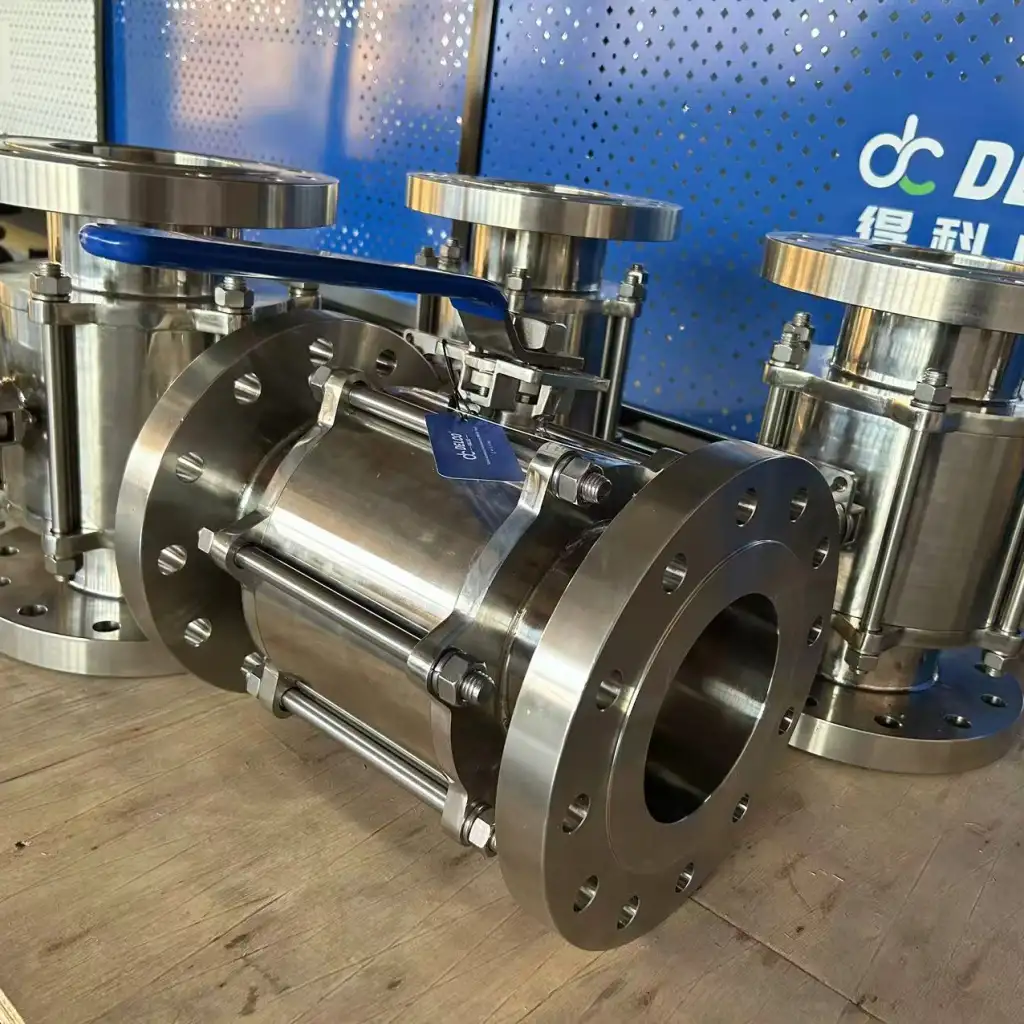
- Clean Utilities & High-Purity Transfer (Clean Steam, Buffer Prep): Cavity-filled sanitary ball valves with true-bore tri-clamp connections to prevent fluid entrapment; non-slam sanitary check valves to prevent backflow and cross-contamination across CIP manifolds.
- High-Volume Purified Water (PW) & Buffer Filtration: Hygienic sanitary butterfly valves with FDA/USP-grade encapsulated EPDM or PTFE/Silicone liners and mirror-polished stainless steel discs.
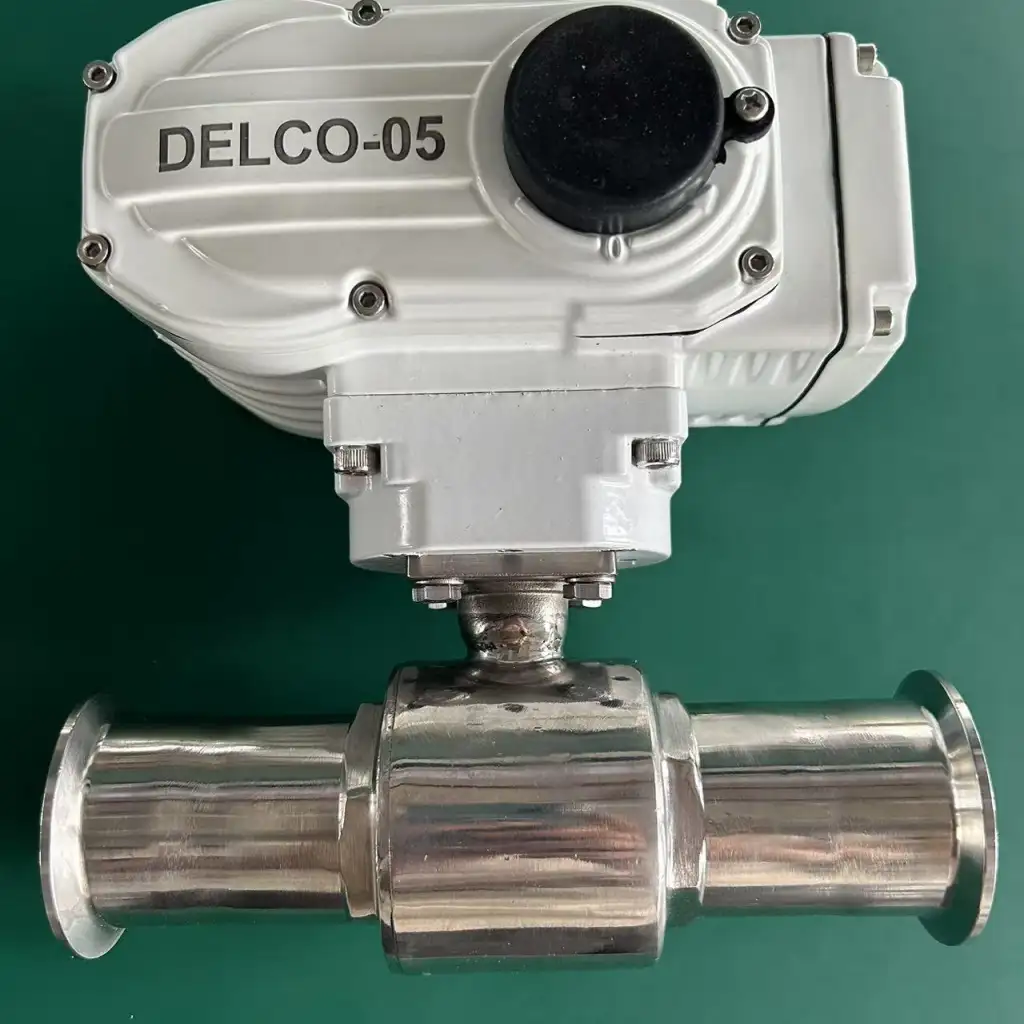
- Automated Batching & Fermentation Regulation: High-precision pneumatic sanitary diaphragm control valves and sanitary electric actuated control valves equipped with digital smart positioners and hygienic stainless steel control tops.
- Materials, Surface Finishes & Traceability: Vacuum-melted low-carbon 316L stainless steel (with controlled sulfur 0.005%–0.017% for automatic orbital welding), USP Class VI and FDA 21 CFR 177.1550/177.2600 certified diaphragms, backed by complete EN 10204 3.1 and Animal-Derived Component Free (ADCF) documentation.

Master Selection Matrix: Pharmaceutical Fluid Loops vs. Valve Architectures
| Process Loop / System | Operating Conditions & Media | Primary Failure / Contamination Risk | Recommended DELCO Valve Solution | ASME BPE Surface Designation | Body Metallurgy & Diaphragm / Seal |
|---|---|---|---|---|---|
| Water for Injection (WFI) Distribution | 80°C–85°C continuous loop Ultra-pure water (< 0.25 EU/ml) | Biofilm colonization, rouge formation, dead-leg stagnant zones | Sanitary diaphragm valves (Weir-type) Zero-deadleg T-valves | SF4 (Electropolished Ra ≤ 0.38 μm / 15 μin) | Forged 316L (1.4435 / controlled sulfur) + TFM/PTFE / EPDM backing |
| Clean Steam & Steam-in-Place (SIP) | 121°C–135°C pure steam Cyclic thermal stress | Diaphragm cold-flow, elastomer embrittlement, bonnet bolt relaxation | Sanitary diaphragm valves (High-temp) Sanitary steam traps | SF1 or SF4 (Ra ≤ 0.51 μm to 0.38 μm) | Forged 316L + Modified PTFE (TFM) with spring-loaded bonnet compensation |
| Bioreactor Vessel Bottom Harvest | Live cell cultures, nutrient broths Full vacuum to 3 bar | Stagnant pocket under bottom outlet, cell shear, batch contamination | Tank bottom diaphragm valves Aseptic radial diaphragm valves | SF4 (Internal wetted) Mirror Electropolished | Block-Forged 316L body profiled to tank radius + USP Class VI PTFE |
| Aseptic Sampling Stations | In-process broth sampling Steam-sterilizable in-line | Cross-contamination of sample line, ambient air ingress | Sanitary sample valves (SIP-able) | SF4 (Ra ≤ 0.38 μm) Fully drainable | 316L Barstock / Forged + EPDM / PTFE double-seal design |
| Clean-in-Place (CIP) Supply & Return | Hot caustic (NaOH 2–3%), Nitric acid (HNO3), 65°C–85°C | Chemical degradation of seals, cross-contamination between circuits | Cavity-filled sanitary ball valves Sanitary check valves | SF1 (Mechanical Ra ≤ 0.51 μm / 20 μin) | 316L Stainless Steel + Pure Virgin PTFE Cavity Fillers |
| Purified Water (PW) & Buffer Filtration | Ambient to 40°C Non-critical buffer transfer | High flow restriction, micro-voids in elastomer liners | Sanitary butterfly valves (Tri-clamp) Sanitary diaphragm valves | SF1 (Ra ≤ 0.51 μm) | ASTM A351 CF3M (316L) + FDA-Grade White EPDM / Silicone |
Four Pharmaceutical Environments, Four Sets of Engineering Rules
Fluid dynamics within a biopharmaceutical plant fall into four distinct hygienic classifications, each requiring uncompromising compliance rules:
- Aseptic Upstream & Downstream Bioprocessing: Zero-crevice design; absolute drainability; complete absence of mechanical stem packings; mandatory ASME BPE compliance; L ≤ 2D dead-leg criteria.
- Clean Utilities (WFI & Clean Steam): Continuous elevated temperatures (> 80°C); high vulnerability to Rouging (Class I/II/III); severe thermal cycling fatigue on elastomer diaphragms.
- Clean-in-Place (CIP) & Buffer Preparation: Exposure to hot chemical sanitizers (2% NaOH, H3PO4); high flow velocities; requires cavity-free components to prevent chemical carryover into subsequent drug batches.
- Active Pharmaceutical Ingredient (API) Chemical Synthesis: Flammable solvents (ethanol, acetone, toluene); hazardous reaction chemistries; requires ATEX / IECEx explosion-proof actuation and conductive antistatic sealing.
1. Water for Injection (WFI) & Clean Utility Distribution
WFI systems are the critical lifeblood of any parenterals or biologics plant. The loop operates under continuous recirculation at 80°C–85°C to prevent bacterial proliferation.
Recommended Configurations:
- Loop Sub-Distribution & Use-Point Drops: Sanitary diaphragm valves configured as Point-of-Use (POU) zero-deadleg block valves. The diaphragm provides a dynamic, hermetic seal isolating the operating mechanism entirely from the ultra-pure water.
- Zero-Deadleg Header Takeoffs: Zero-deadleg T-valves machined from solid 316L forged blocks, routing fluid directly from the main distribution loop to equipment with zero stagnant piping branches.
- Utility Backflow Prevention: Spring-loaded sanitary check valves with polished internals and tri-clamp ends to prevent siphon-back into pure water storage tanks.
⚠️ What Goes Wrong in WFI Loops
- The "Dead-Leg" Biofilm Incubator: Traditional piping layouts often feature a run-to-branch takeoff where water sits uncirculated. If the branch length exceeds the diameter (L > 2D), stagnant water cools, sanitizing chemicals fail to penetrate, and bacterial endotoxins colonize the pipe wall.
DELCO Valve Solution: DELCO Valve engineers custom multi-port zero-deadleg T-valves and integrated valve manifolds that eliminate dead legs entirely (L/D approaches 0), ensuring continuous turbulent flow across the weir seat. - The Horizontal Puddling Catastrophe: Installing a standard weir-type diaphragm valve horizontally on a flat plane creates a natural liquid trap on the low side of the internal weir, preventing complete gravity draining during line discharge.
DELCO Valve Solution: All DELCO Valve sanitary diaphragm valves are laser-marked with exact Self-Drain Installation Angles (15° to 35°) on the forged body, guaranteeing 100% gravity self-drainage and zero pooling during CIP cycles.
2. Aseptic Bioreactors, Fermentation & Sterile Harvesting
Bioreactors and seed fermenters represent the highest financial risk in bioprocessing. Introducing wild microorganisms via a compromised valve can destroy millions of dollars in recombinant protein or antibody harvests.
Recommended Configurations:
- Vessel Bottom Drain & Inoculation: Tank bottom diaphragm valves. The valve body is machined with a radius contoured specifically to match the tank bottom dish, allowing the sealing weir to sit flush with the internal vessel wall.
- Sterile In-Process Sampling: Sanitary sample valves featuring independent SIP steam purge ports. The valve can be sterilized with clean steam before and after taking a grab sample, preventing microbial ingress into the bioreactor.
- Exhaust Gas & Sterile Venting: Low-differential sanitary diaphragm valves for sterile filter housing isolation.
⚠️ What Goes Wrong in Bioreactor Operations
- The "Bottom Outlet Stagnant Puddle": Attaching a standard flanged or clamped valve to a vessel outlet nozzle creates an unmixed, unsterilized "chimney" of broth beneath the agitator. During Steam-in-Place (SIP), steam fails to reach this pocket, contaminating the entire batch upon inoculation.
DELCO Valve Solution: DELCO Valve tank bottom diaphragm valves are welded directly into the bottom head of the vessel, placing the diaphragm seal flush against the internal vessel wall with zero stagnant nozzle volume. - Diaphragm Steam Fatigue & Cold-Flow Creep: Standard EPDM diaphragms subjected to 130°C pure steam under continuous mechanical clamping suffer vulcanization embrittlement and permanent compression set. Conversely, pure PTFE diaphragms experience cold-flow creep, resulting in external leakage past the body flange.
DELCO Valve Solution: DELCO Valve supplies Two-Piece Modified TFM/PTFE Diaphragms. The process-contact face is molded from high-density, low-porosity TFM PTFE, interlocked with a vulcanized high-elasticity EPDM backing cushion that absorbs thermal expansion cycles without relaxation.
3. Clean-in-Place (CIP), Buffers & Active API Synthesis
Where process media involves heavy buffers, cell lysates, or organic solvents, quarter-turn valves are deployed for high-flow transfer and positive shutoff.
Recommended Configurations:
- CIP Skid & Clean Fluid Transfer: Cavity-filled sanitary ball valves. High-precision machined virgin PTFE cavity filler seats encapsulate the entire ball perimeter, preventing process fluid, yeast slurry, or cleaning chemicals from settling into the internal body cavity.
- Large-Diameter Purified Water Lines (DN50–DN200): Hygienic sanitary butterfly valves with encapsulated silicone or EPDM seats, offering rapid quarter-turn isolation with minimal footprint.
- Clean Solvent & Alcohol Delivery Skids: ATEX / IECEx certified explosion-proof electric actuated sanitary control valves and pneumatic sanitary diaphragm control valves for solvent fractionation and column chromatography.
Failure Analysis: 4 Severe Pharmaceutical Valve Failures & Engineered Fixes
| Failure Mechanism | Affected Pharma Systems | Root Engineering Cause | Conventional (Flawed) Approach | DELCO Valve Engineered Solution |
|---|---|---|---|---|
| Dead-Leg Biofilm Growth | WFI distribution, purified water use-points | Branch takeoff length exceeds diameter (L/D > 2), creating uncirculated fluid pockets. | Relying on chemical sanitization flushes to penetrate dead legs. | Zero-deadleg T-valves and machined multi-port block manifolds that place the weir directly on the loop OD (L/D = 0). |
| Diaphragm Cold-Flow & Tearing | Clean steam SIP lines, bioreactor harvest ports | Repetitive thermal expansion cycles at 130°C cause pure PTFE to creep and crack. | Over-torquing bonnet bolts manually during maintenance shutdowns. | Two-piece TFM/PTFE + EPDM backed diaphragms paired with DELCO Valve spring-compensated bonnets maintaining constant live-load stress. |
| Orbital Welding Bead Porosity | Cleanroom piping spools, tri-clamp valve ferrules | 316L base metal sulfur content varies or exceeds standard thresholds (S > 0.030%). | Manual hand-welding and grinding internal pipe seams, introducing abrasives. | Strict control of base material sulfur (0.005%–0.017%) per ASME BPE Table MM-2.1-1, guaranteeing smooth, uniform orbital weld pools. |
| Rouging & Particulate Shedding | Hot WFI storage (> 80°C), pure steam headers | Passive chromium oxide layer breaks down, precipitating iron oxide nano-particles. | Frequent aggressive chemical derouging with hazardous organic acids. | Full ASME BPE SF4 electropolishing (Ra ≤ 0.38 μm) followed by validated nitric/citric acid passivation (Cr/Fe ratio ≥ 1.5). |
Quality Assurance, Electropolishing & ASME BPE Standards
Pharmaceutical valve qualification is governed by rigorous surface metallurgy, ferrite control, and chemical inertness certifications:
ASME BPE Internal Surface Finish Classifications
All DELCO Valve pharmaceutical valve wetted surfaces are inspected via profilometer testing and certified to ASME BPE Part SF standards:
| Surface Designation | Surface Finish Process | Maximum Roughness Average (Ra Micro-Inch) | Maximum Roughness Average (Ra Micrometer) | Recommended Pharmaceutical Application |
|---|---|---|---|---|
| ASME BPE SF1 | Mechanically Polished | ≤ 20 μin | ≤ 0.51 μm | Buffer preparation, CIP chemical skids, non-sterile utility loops |
| ASME BPE SF2 | Mechanically Polished | ≤ 25 μin | ≤ 0.64 μm | General utility headers, drain collection, non-critical process fluid |
| ASME BPE SF4 | Mechanical Polish + Electropolished | ≤ 15 μin | ≤ 0.38 μm | Gold Standard: WFI distribution, sterile bioreactor harvesting, API crystallization |
| ASME BPE SF5 | Mechanical Polish + Electropolished | ≤ 20 μin | ≤ 0.51 μm | Critical pure steam headers, aseptic filling machine manifolds |
Metallurgy & Delta Ferrite Control
Standard stainless steel castings often contain 5%–10% delta ferrite to facilitate mold flow. In high-purity pharmaceutical water, excessive ferrite undergoes selective dissolution, accelerating rouging and shedding rust particles into sterile streams.
- Controlled Metallurgy: DELCO Valve manufactures sanitary valve bodies from vacuum-degassed forged 316L (EN 1.4435).
- Ferrite Restriction: Delta ferrite content is strictly limited to ≤ 1.0% (and ≤ 0.5% upon request), verified via Fischer Feritscope testing to ensure maximum corrosion resistance.
- Sulfur Range (0.005%–0.017%): Strictly maintained to guarantee repeatable, crevice-free orbital butt-welding without heat tint or pool sag.
Pharmaceutical Elastomers & Diaphragm Material Hierarchy
All dynamic seals, diaphragms, and O-rings deployed in DELCO Valve sanitary equipment comply with international pharmacopeia mandates:
| Diaphragm / Seal Material | Temperature Continuous Range | Steam-in-Place (SIP) Resistance | Resistance to CIP Caustic/Acid | Biocompatibility Certifications |
|---|---|---|---|---|
| Pharmaceutical Grade EPDM | -30°C to 130°C | Excellent elasticity; up to 100 SIP cycles (121°C) | Good in caustic (NaOH); moderate in nitric acid | USP Class VI <87>/<88>, FDA 21 CFR 177.2600, TSE/BSE Free |
| Two-Piece TFM / EPDM (PTFE) | -20°C to 160°C | Superior: High-frequency 135°C continuous pure steam | Universal chemical resistance (pH 0–14) | USP Class VI, FDA 21 CFR 177.1550, ADCF (Animal-Free) |
| Platinum-Cured Silicone | -60°C to 180°C | Moderate (Prone to steam hydrolytic degradation) | Poor in concentrated acids/alkalis; ideal for pure buffers | USP Class VI, ISO 10993, FDA 21 CFR 177.2600 |
| Fluoroelastomer (FKM / Viton) | -10°C to 180°C | Moderate in steam; excellent in high-temp air | Excellent in acids and organic solvents; poor in caustic | USP Class VI, FDA 21 CFR 177.2600 |
Dedicated Support for Biopharma EPCs, Skid Builders & Validation Teams
When engineering a pharmaceutical facility, valve procurement is directly tied to validation qualification (IQ/OQ/PQ). An unverified valve component can halt an entire FDA facility approval. DELCO Valve acts as your technical validation back-office:
- Comprehensive cGMP Validation Dossier: Every delivery includes a pre-compiled validation documentation binder:
- EN 10204 3.1 Material Test Reports (MTRs) with complete heat number traceability.
- FDA 21 CFR 177 conformity certificates for all polymers and elastomers.
- USP <87> (In Vitro) and USP <88> (In Vivo) Class VI biological reactivity test logs.
- TSE/BSE Animal-Derived Component Free (ADCF) non-contamination declarations.
- Calibrated Profilometer Surface Roughness (Ra) & Electropolishing certification.
- Delta Ferrite inspection reports.
- 3D CAD & BIM Integration (12–24h Turnaround): Receive native 3D STEP and Revit models with accurate center-to-face dimensions and self-drain angle indicators for direct integration into your plant digital twin.
- Pre-Assembled & Cleanroom Packaged: Valves are ultrasonic-cleaned, dried with filtered nitrogen, double-bagged in cleanroom poly tubing, and tagged with stainless steel serialization for point-of-use traceability.
- Project Registration & Channel Protection: We protect engineering consultants and regional bioprocess stockists. Project registration guarantees DELCO Valve will never bypass your company to quote directly to your designated pharmaceutical drug sponsor.
Actuation Selection for Cleanrooms & Washdown Environments
Pharmaceutical cleanrooms (ISO 5 to ISO 8 / Grade A to Grade D) demand non-shedding, corrosion-proof, and washdown-resistant automation packages:
- Stainless Steel Pneumatic Actuators: High-performance 304 or 316 stainless steel piston actuators with zero external crevices. Resistant to daily wipe-downs with isopropyl alcohol (IPA), sporagard, and hydrogen peroxide (VHP) misting.
- Hygienic Control Tops: Integrated digital control heads featuring non-contact magnetic position sensors, internal pilot solenoid valves, and IO-Link / AS-Interface / DeviceNet fieldbus communication.
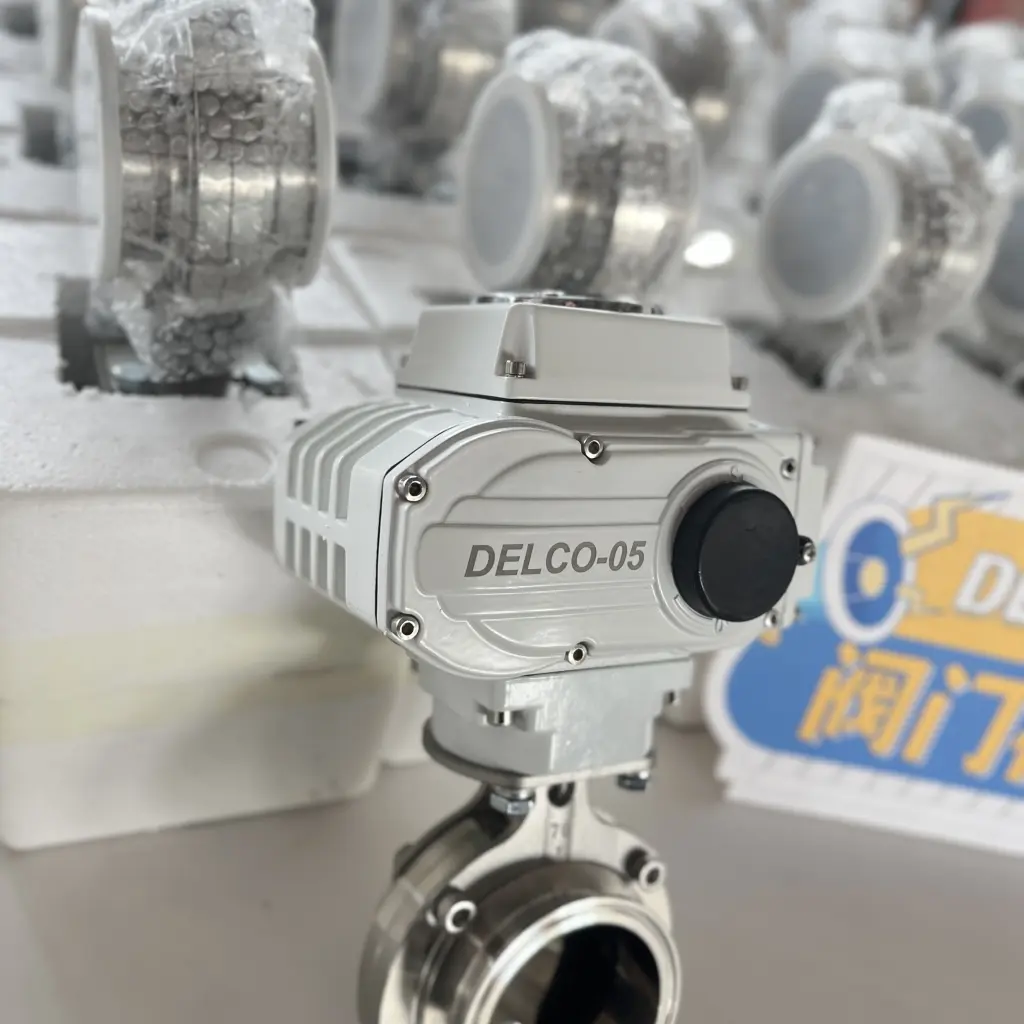
- Electric Actuated Modulating Valves: Non-intrusive electric actuated sanitary control valves rated IP67/IP69K for buffer addition, CIP chemical concentration control, and continuous pH adjustment.
How to Get an Engineering Quotation in 12 to 24 Hours
To receive an exact technical proposal, ASME BPE compliance verification, and commercial pricing without clarification delays, copy and send this 7-parameter pharmaceutical checklist:
PHARMACEUTICAL VALVE RFQ CHECKLIST
- Application Point & Fluid Loop: [e.g., WFI Distribution Drop, Bioreactor Tank Bottom, Clean Steam SIP, CIP Return]
- Process Media & Temperature: [e.g., Water for Injection at 85°C, Pure Steam at 130°C, Fermentation Broth, 2% NaOH]
- Design & Operating Envelope:
- Operating Pressure / Steam Sterilization Pressure: [bar or psi]
- Operating Temperature / Maximum SIP Steam Temperature: [°C or °F]
- Nominal Size & Tri-Clamp Standard: [e.g., 0.5”, 1.0”, 1.5”, 2.0” ASME BPE Tri-Clamp / Extended Butt-Weld for Orbital Welding]
- Surface Finish Specification: [ASME BPE SF1 (Ra ≤ 0.51 μm) or ASME BPE SF4 Electropolished (Ra ≤ 0.38 μm)]
- Diaphragm & Elastomer Material: [Pharmaceutical Grade EPDM / Two-Piece TFM-PTFE with EPDM Backing]
- Actuation & Instrumentation: [Manual Handwheel with Optical Position Indicator / Stainless Pneumatic Actuator / Smart Control Top]
Example Tender Enquiry:
Bioreactor Harvesting Skid, Cell Culture Broth, 1.5” (DN40) ASME BPE Tri-Clamp ends, Forged 316L Stainless Steel body (EN 1.4435 with Ferrite < 1.0%), Internal Surface Electropolished to ASME BPE SF4 (Ra ≤ 0.38 μm), Two-Piece TFM/PTFE Diaphragm with EPDM backing (USP Class VI, FDA compliant, TSE/BSE Free), equipped with compact stainless steel pneumatic actuator (Air-to-Open, Spring-Close) and 24V DC IO-Link control top.
Send your equipment schedule to our bioprocess engineering team at inquiry@delcofluid.com, and DELCO Valve will return matched model codes, dimensional drawings, and commercial pricing within 12 to 24 hours.
Frequently Asked Questions
Mechanical polishing (SF1) cuts down surface peaks using abrasives, which can smear metal, fold over microscopic fissures, and leave embedded iron particles. Electropolishing (SF4) is an electrochemical process that microscopically dissolves peaks, rounding crevices and removing free iron from the surface. This creates an ultra-smooth chromium-enriched passive layer (Cr/Fe ≥ 1.5), dramatically reducing surface area for biofilm adhesion and delaying the onset of rouging in high-temperature WFI.
During automated orbital butt-welding, sulfur acts as a surface-active element that dictates the fluid dynamics and heat penetration of the molten weld pool. If sulfur is too low (< 0.005%), the weld pool widens and penetration is shallow; if sulfur is too high (> 0.030%), the pool sags and causes internal weld beads. DELCO Valve strictly controls sulfur content to 0.005%–0.017% per ASME BPE Table MM-2.1-1, ensuring consistent, repeatable, crevice-free full-penetration welds without manual rework.
The "dead-leg" is the stagnant branch pipe section leading to a closed valve seat. Under the modern ASME BPE L ≤ 2D rule, the length (L) of this branch must not exceed twice its inner diameter (D). At this ratio, the turbulent fluid eddies from the main pipeline continuously scour and wash the internal valve seat. If L > 2D, fluid inside the pocket remains stagnant, allowing bacteria to form protective biofilms and release endotoxins that contaminate the pure water loop.
One-piece EPDM diaphragms embrittle and adhere to the metal weir under continuous 130°C pure steam exposure. Conversely, one-piece pure PTFE diaphragms lack elastomeric memory and suffer cold-flow creep under mechanical gland pressure, causing external leaks during thermal cooldown. A two-piece diaphragm combines a virgin, modified TFM/PTFE contact layer (providing chemical inertness and steam wear resistance) with an independent, vulcanized EPDM backing cushion that provides continuous mechanical elasticity and sealing pressure across thermal cycles.
Ready to Quote Your Pharmaceutical Project with DELCO Valve?
Whether you are preparing an ASME BPE tender submittal for a new biotech facility, building modular bioprocess skids, or retrofitting high-temperature WFI loops, DELCO Valve delivers certified sanitary valve assemblies on time and within budget.
- Submit Your RFQ / Equipment Schedule: Send your equipment list or 7-parameter checklist to our bioprocess team for a 12–24h technical turnaround.
- Explore Our Complete Sanitary Line: Discover our full portfolio across sanitary diaphragm valves, zero-deadleg T-valves, tank bottom diaphragm valves, cavity-filled sanitary ball valves, and sanitary control packages.
- Distributor & Skid Builder Inquiries: Contact our international channel team to request our complete validation template package, 3D CAD library, and OEM project registration terms.